
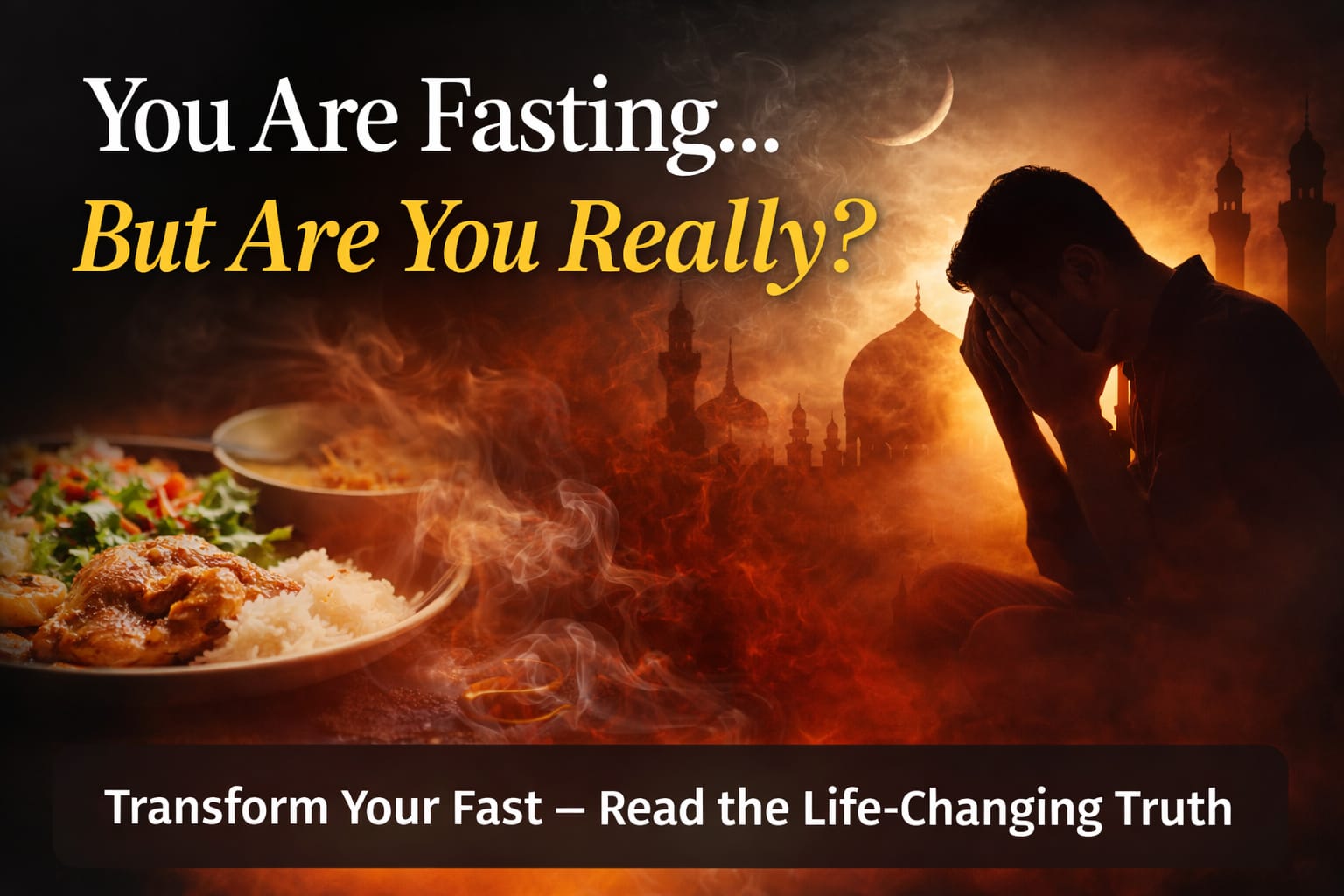
Fasting: The Outer Act & The Inner Reality
A Journey From Hunger to the Heart
Introduction: Is Fasting Only About Not Eating?
Every year, millions of people fast.
Millions wake up early, skip food, skip water, feel hunger, feel thirst, feel tired.
But let me ask you something honestly…
👉 Do all of them change from inside?
👉 Do all of them feel closer to Allah?
👉 Do all of them come out better human beings?
The painful truth is: no.
Some people fast all day and still lie.
Some fast and still hurt others.
Some fast and still feel empty inside.
So the question is not “Are we fasting?”
The real question is:
👉 What kind of fasting are we doing?
Islam teaches us that fasting has two sides:
- The outer act – what people see
- The inner reality – what Allah sees
This article is a journey — not just about food and drink, but about hearts, souls, ego, and transformation.
If you read this with an open heart, it can change the way you fast forever.
Part 1: The Outer Act of Fasting – What We Do With Our Body
1. What Is Fasting in Islam? (Very Simple)
Fasting in Islam means:
- Not eating
- Not drinking
- Not having marital relations
- From dawn (Fajr) to sunset (Maghrib)
This is the basic rule. Every Muslim knows this.
But fasting is not just a rule — it is training.
Allah did not need us to stay hungry.
Allah wants something bigger.
Fasting is discipline.
Fasting is control.
Fasting is obedience.
Even when no one is watching, you don’t eat.
Even when you are alone, you don’t drink.
Why?
Because Allah is watching.
That is already the beginning of something deep.
2. Physical Discipline: Training the Body
Your body is used to comfort.
- Eat when hungry
- Drink when thirsty
- Sleep when tired
Fasting says:
👉 “Not now. Wait.”
This teaches your body:
- Patience
- Self-control
- Strength
Hunger reminds you:
- You are weak
- You are dependent
- You are not in control of everything
This breaks arrogance.
When your stomach is empty, your ego becomes quieter.
3. Behavioral Fasting: More Than Food
Here is something very important that many people ignore:
🚫 Fasting is not only about the stomach
🚫 It is also about behavior
The Prophet ﷺ said that if a fasting person:
- Lies
- Uses bad words
- Fights
- Hurts others
Then Allah does not need his hunger and thirst.
That is scary.
That means:
👉 You can be fasting and still failing.
Real fasting includes:
- Guarding your tongue
- Controlling anger
- Avoiding gossip
- Being gentle
If fasting makes you angry, rude, or harsh — something is wrong.
4. The Social Side of Fasting
Fasting connects us to others.
When you feel hunger, you understand:
- The poor
- The hungry
- The struggling
Suddenly, food has value.
Suddenly, water feels like a gift.
This is why fasting:
- Increases charity
- Softens hearts
- Builds empathy
Fasting should make us kinder, not harder.
Part 2: The Inner Reality of Fasting – What Happens Inside the Heart
Now we move to the most important part.
This is where fasting becomes life-changing.
5. Intention (Niyyah): The Heart of Fasting
Two people can do the same fast.
One gets reward.
One gets nothing.
Why?
👉 Intention
Are you fasting because:
- Everyone is fasting?
- Culture?
- Habit?
Or are you fasting because:
- You want Allah?
- You want closeness?
- You want change?
Allah looks at the heart, not the hunger.
A small fast with a sincere heart is better than a long fast with no awareness.
6. Fasting and Taqwa: Awareness of Allah
Allah says in the Qur’an:
“Fasting is prescribed for you so that you may gain taqwa.”
Taqwa means:
- Being aware of Allah
- Feeling Allah watching you
- Choosing right even when tempted
When fasting:
- You don’t eat because Allah sees
- You don’t drink because Allah knows
This awareness slowly spreads to:
- Your words
- Your actions
- Your thoughts
That is the real goal.
7. Breaking the Ego (Nafs)
Your nafs always wants:
- More food
- More comfort
- More pleasure
- More control
Fasting says:
👉 “No.”
This weakens the nafs.
This strengthens the soul.
You learn:
- You don’t need everything you want
- You can survive without comfort
- You can say no to desires
This is freedom.
8. Emotional and Spiritual Cleansing
Fasting brings emotions to the surface.
Anger.
Sadness.
Jealousy.
Pain.
Why?
Because food often hides emotions.
When food is gone, the heart speaks.
This is your chance to:
- Forgive
- Heal
- Let go
Fasting is like a mirror.
It shows you who you really are.
Part 3: When Fasting Is Empty
This is a hard truth, but necessary.
9. Empty Fasting: Hunger Without Reward
The Prophet ﷺ warned us:
Some people get nothing from fasting except hunger and thirst.
Why?
Because:
- Their tongue fasted? No
- Their eyes fasted? No
- Their heart fasted? No
They starved the body but fed the ego.
This fasting changes nothing.
10. Ritual Without Transformation
If after fasting:
- You are the same person
- Same anger
- Same habits
- Same sins
Then fasting became a ritual, not a journey.
Rituals are empty without reflection.
Ask yourself:
👉 “Am I different than before?”
Part 4: Making Fasting Transformative
Now the hopeful part 🌱
11. How to Make Fasting Real
Simple steps:
- Start your fast with a real intention
- Talk to Allah in your own words
- Be kind on purpose
- Control your tongue
- Forgive someone
Small actions.
Big impact.
12. Life After Fasting
The real success of fasting is:
👉 Who you become after it ends.
If fasting taught you:
- Patience
- Control
- Awareness
Then fasting succeeded.
Fasting is not meant to end.
Its lessons should stay.
Conclusion: Fasting Is a Journey, Not Starvation
Fasting is not about food.
It is about freedom from ego.
It is about returning to Allah.
It is about becoming human again.
When the stomach is empty,
the heart becomes full.
May our fasting:
- Change us
- Heal us
- Bring us closer to Allah
And may we never be among those who fast,
but gain nothing.
Ameen 🤲
Leave a Reply