

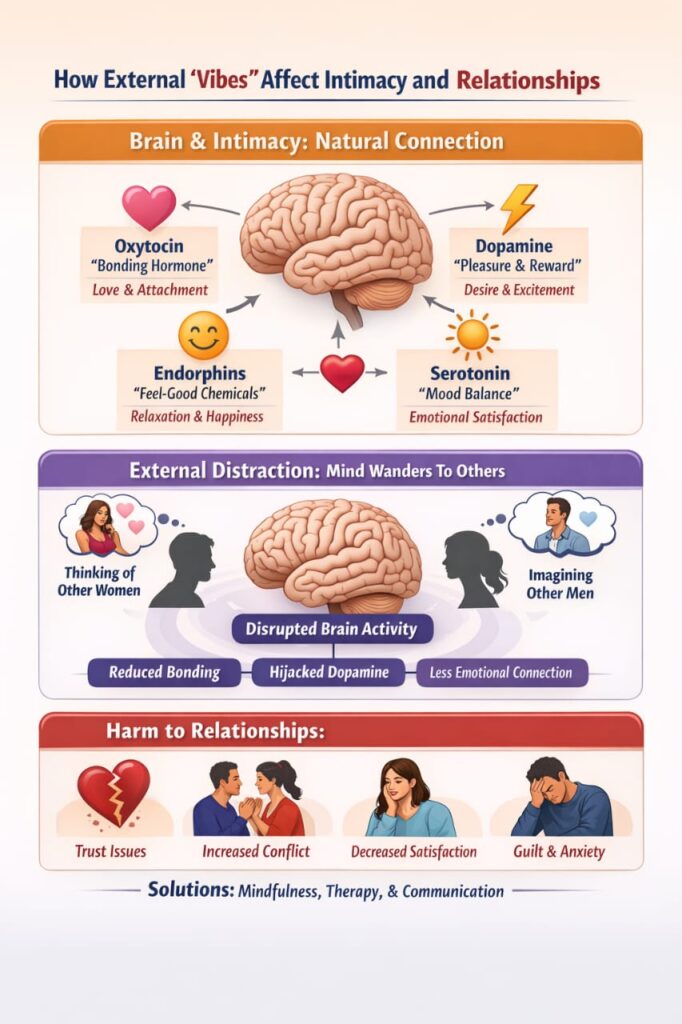
How External “Vibes” Affect Intimacy and Relationships: Understanding the Brain and Love
Intimacy is one of the most beautiful connections two humans can have. It’s not just about physical closeness—it’s about trust, love, and emotional bonding. But in today’s world, many couples face a hidden challenge: the mind drifting toward someone else, even while being intimate with a partner. This can be subtle—a fleeting thought—or more serious, like constantly imagining other people during intimate moments.
This article will explain in simple words how intimacy works in the brain, why this “external vibe” problem happens, and what it does to relationships. We will also explore ways to fix it and strengthen the bond between partners.
1. Understanding Intimacy
Before we talk about problems, let’s understand intimacy itself.
Intimacy is emotional, physical, and sexual closeness between partners. It is meant to:
- Build trust and love
- Strengthen the bond between two people
- Provide emotional safety and happiness
From a spiritual or religious perspective, intimacy is sacred. Many traditions teach that sex and closeness are gifts meant for a committed relationship.
But sometimes, couples experience something that interrupts this connection: the brain or mind being distracted by someone else—someone outside the relationship. Some people call it “external vibes.” For example:
- A man might mentally think about another woman.
- A woman might imagine another man.
Even if nothing physically happens, this mental distraction changes the purpose and quality of intimacy.
2. How the Brain Works During Intimacy
To understand why “external vibes” are a problem, we need to look at the science of the brain during sex and closeness.
2.1 Chemicals of Love and Pleasure
When we are intimate, the brain releases special chemicals that make us feel good:
- Oxytocin: Known as the “bonding hormone.” It makes partners feel close and connected. It’s released during hugging, kissing, and sex.
- Dopamine: The “pleasure chemical.” It creates excitement and desire.
- Endorphins: Reduce stress and make the body feel relaxed and happy.
- Serotonin: Helps regulate mood and emotional satisfaction.
When these chemicals flow, intimacy feels rewarding. But when the mind is thinking about someone else, these chemicals may not fully connect to the partner, reducing satisfaction.
2.2 Brain Regions Involved
Different parts of the brain help manage intimacy:
- Hypothalamus: Controls sexual desire and hormone release.
- Ventral Tegmental Area (VTA): Processes pleasure and reward.
- Prefrontal Cortex: Helps with focus and control. It’s supposed to keep attention on the partner.
2.3 What Happens with External Thoughts
If someone’s mind drifts to another person:
- The prefrontal cortex is overloaded with distractions.
- Dopamine reward shifts to imagined thoughts instead of the real partner.
- Emotional and physical connection weakens.
Research Support:
Harvard Medical School and other neuroscience studies have shown that brain imaging of people fantasizing about someone else during intimacy shows less activation in bonding regions, meaning the connection with the partner is weaker.
3. Psychological and Emotional Consequences
When the brain is distracted, it doesn’t just affect sex—it affects the mind and heart.
3.1 For the Individual
- Guilt and shame: Feeling bad about thinking of someone else.
- Reduced satisfaction: The partner feels less exciting or rewarding.
- Fantasy dependence: The brain starts craving external thoughts more than real intimacy.
3.2 For the Relationship
- Emotional disconnect: Couples may feel distant even if physically close.
- Conflict and resentment: Arguments may arise over attention, closeness, or trust.
- Long-term issues: Reduced intimacy can slowly erode the relationship foundation.
3.3 Spiritual and Moral Impact
Many traditions teach that intimacy is sacred and for strengthening the bond between two people. When the mind wanders to someone else:
- The spiritual connection may weaken.
- The purpose of intimacy—to build love and trust—is compromised.
4. Why People Drift Mentally During Intimacy
You may wonder: why do people even think of others while being intimate?
4.1 Common Patterns
- Men or women may mentally check out during sex.
- Fantasizing about past partners or celebrities.
- Social media and pornography increase distractions.
4.2 Psychological Causes
- Lack of emotional fulfillment: If the partner is not emotionally present, the mind looks elsewhere.
- Habitual sexual fantasies: Some people get used to thinking of others.
- Anxiety or stress: Some use fantasy as an escape from emotional pressure.
- Low self-esteem: The mind seeks validation from imagining someone else.
5. Harms of External Vibes in Relationships
This is where the problem becomes serious. Thinking about someone else during intimacy can harm relationships in many ways:
5.1 Weakening Emotional Bond
- Less oxytocin is released toward the partner.
- Less dopamine reward makes the partner seem less attractive.
5.2 Trust Issues
- Mental distractions can lead to emotional cheating, which may eventually result in real-life cheating.
5.3 Decreased Satisfaction
- Couples feel less happy with each other.
- Communication may drop because emotional closeness is weakened.
5.4 Mental Health Impact
- Guilt, anxiety, and stress increase.
- Over time, this can lead to depression or chronic dissatisfaction.
6. Therapeutic Approaches
The good news: relationships can be healed and strengthened!
6.1 Couples Therapy
- Focuses on emotional and physical closeness.
- Techniques like mindfulness during intimacy help partners stay present.
- Communication exercises allow sharing desires without judgment.
6.2 Individual Therapy
- Cognitive Behavioral Therapy (CBT) helps control intrusive thoughts.
- Sex therapy focuses on building focus and satisfaction with the partner.
- Mindfulness and meditation train the brain to stay present.
6.3 Neuroscience-Based Methods
- Neuroplasticity exercises: Train the brain to connect pleasure to the actual partner.
- Hormonal balance checks: Low testosterone or other hormonal issues may affect desire.
6.4 Lifestyle Adjustments
- Reduce social media and pornography triggers.
- Increase non-sexual intimacy like holding hands, talking, laughing together.
- Reinforce spiritual or value-based commitment if that is part of your life.
Research Support:
- Harvard Medical School studies show that mindfulness-based sex therapy improves intimacy satisfaction.
- Masters & Johnson therapy approaches show lasting benefits for couples who stay emotionally connected.
7. How to Strengthen Bonds and Prevent Distraction
Prevention is always better than cure. Here are practical tips:
7.1 Emotional Presence
- Make eye contact during intimacy.
- Use touch, verbal affirmation, and small gestures to stay connected.
7.2 Open Communication
- Talk about fantasies or attractions safely without judgment.
- Mutual understanding strengthens trust.
7.3 Shared Activities
- Spend quality time together outside the bedroom.
- Shared hobbies, trips, and laughter strengthen emotional closeness.
7.4 Gratitude and Appreciation
- Regularly express appreciation for your partner.
- Celebrate each other’s presence and uniqueness.
7.5 Mindfulness Practices
- Meditate together or individually.
- Focus on being fully present in every intimate moment.
8. Conclusion
Intimacy is not just about pleasure. It is about bonding, trust, and emotional closeness. When the mind drifts to someone else, it can disrupt these connections.
Science shows that external distractions:
- Reduce bonding hormones like oxytocin.
- Shift pleasure from real partners to imagined ones.
- Cause guilt, stress, and relationship dissatisfaction.
But there is hope. Therapy, mindfulness, communication, and conscious effort can help couples reconnect deeply. Intimacy can become more rewarding and fulfilling when partners are fully present with each other.
Remember: love is not only a feeling—it’s also a practice of presence, trust, and shared happiness. By staying connected, couples can experience intimacy in its true, beautiful sense.
How to Strengthen Intimacy: Spiritual, Healing, and Mind Techniques for Couples
Many couples today face a subtle but serious problem: while being intimate, their mind drifts toward someone else. This can reduce emotional bonding, make intimacy less satisfying, and even cause guilt or anxiety.
The good news is that there are many ways to heal and strengthen intimacy—through spirituality, religion, diet, meditation, NLP, healing therapies, yoga, and more. This guide explains these solutions in very simple language, so anyone can use them.
1. Spiritual Solutions
Spiritual practices can help you focus on your partner, strengthen love, and reduce wandering thoughts.
1.1 Mindful Presence
- Practice being fully present during intimacy.
- Close your eyes, breathe slowly, and feel your partner’s touch.
- Focus on gratitude for having each other.
1.2 Prayer and Blessings
- Pray together or individually before intimacy.
- Ask for emotional closeness, love, and protection for your bond.
- Example: Say a short blessing like: “May our love grow stronger and pure.”
1.3 Gratitude Rituals
- Daily gratitude for your partner strengthens emotional bonds.
- Write or say 3 things you love about your partner every day.
2. Religious Solutions for All Faiths
Faith can provide structure and sacredness to intimacy:
2.1 Islam
- Treat intimacy as a sacred act of love and bonding.
- Recite short prayers or verses before intimacy to focus on love and connection.
- Avoid external thoughts by remembering commitment and respect.
2.2 Christianity
- Couples can pray together or read Bible verses about love.
- Meditate on unity and emotional closeness.
- Forgive and let go of past distractions.
2.3 Hinduism
- Use mantras like “Om Shreem Namah” or Ganesha and Lakshmi mantras for love and harmony.
- Light a candle or incense to create a sacred atmosphere.
2.4 Buddhism
- Practice mindfulness meditation before and after intimacy.
- Focus on loving-kindness (Metta meditation) toward each other.
- Breathe together to increase emotional connection.
2.5 Other Faiths
- The key is rituals that honor commitment, love, and presence.
- Any sacred words, prayers, or meditation before intimacy helps the mind focus on your partner.
3. Dietary Solutions for Better Focus and Love
What you eat affects your brain, hormones, and sexual energy.
3.1 Foods That Boost Love Hormones
- Oysters and seafood – improve libido.
- Dark chocolate – increases dopamine and serotonin.
- Nuts and seeds – support hormones.
- Fruits like bananas and berries – improve energy and mood.
3.2 Avoid Foods That Reduce Focus
- Too much sugar or caffeine can spike energy and then cause crashes.
- Heavy, greasy foods make you feel tired and distracted.
3.3 Hydration
- Drink enough water to improve brain and hormonal function.
4. Spiritual Fragrances and Aromatherapy
Scents can affect the brain, hormones, and emotional focus.
- Rose – increases love and bonding feelings.
- Sandalwood – calming, helps emotional focus.
- Lavender – relaxes stress and anxiety.
- Jasmine – improves sexual energy.
How to use:
- Light incense, essential oils, or diffusers in the bedroom before intimacy.
- Take deep breaths together to feel connected.
5. NLP (Neuro-Linguistic Programming) and Silva Advanced Meditation
NLP and Silva techniques help train your mind to focus and control wandering thoughts.
5.1 NLP Techniques
- Anchoring: Create a physical gesture (like holding hands) linked to love and presence.
- Visualization: Imagine your partner’s face and feelings while intimate.
- Reframing: When distracted by someone else, consciously replace the thought with gratitude or a loving memory with your partner.
5.2 Silva Advanced Meditation
- Meditate in a relaxed state before intimacy.
- Visualize your brain releasing oxytocin and dopamine toward your partner.
- Use guided Silva meditation audios for focus, love, and emotional clarity.
6. Stone Healing Therapy
Certain crystals can help focus energy, reduce distraction, and improve emotional bonding:
- Rose Quartz – love, harmony, emotional healing.
- Amethyst – calm mind, reduces anxiety and wandering thoughts.
- Carnelian – increases sexual energy and passion.
How to use:
- Place stones in the bedroom or under your pillow.
- Hold a stone in your hand during meditation or intimacy.
- Focus on its energy and your partner.
7. Color Therapy
Colors can influence mood, focus, and intimacy.
- Red – passion, love, energy. Use for bedroom decor or clothing.
- Pink – warmth, care, emotional bonding.
- Purple – calm, spiritual connection.
- Blue – peace, mental clarity.
How to use:
- Paint a wall, use lighting, or wear clothes in these colors.
- Choose colors based on the feeling you want to create.
8. Yoga, Meditation, and Mantras
Yoga strengthens the body, relaxes the mind, and increases sexual energy.
8.1 Yoga Poses
- Yab Yum Pose – sitting face to face, connect physically and emotionally.
- Bridge Pose – increases energy flow and pelvic focus.
- Child’s Pose with Partner – calm, relaxing, emotional bonding.
8.2 Meditation
- Focus on breathing together.
- Visualize energy flowing between you and your partner.
- Meditate for 10–20 minutes before intimacy to calm the mind.
8.3 Mantras
- Repeat mantras that focus on love, connection, or divine energy.
- Examples:
- “Om Shanti Shanti Shanti” – peace and focus.
- “Om Premaye Namah” – love energy.
- Say silently or aloud, individually or together.
9. Practical Daily Routine for Couples
Here’s a simple daily routine to reduce distractions and improve intimacy:
- Morning: Gratitude exercise – say 3 things you love about each other.
- Afternoon: Eat healthy, hydrate, take a short walk together.
- Evening: Light fragrance, meditate together, practice yoga poses.
- Before Intimacy: Prayer/mantra, deep breathing, visualize love energy flowing to each other.
- During Intimacy: Stay present, focus on touch, hold hands, and maintain eye contact.
10. Key Takeaways
- Wandering thoughts or external “vibes” are normal, but they can harm emotional and physical intimacy.
- Spiritual, religious, dietary, meditation, healing, and yoga methods help redirect energy and focus toward your partner.
- Consistent practice creates stronger love, trust, and pleasure.
- This approach works for all faiths and beliefs, because the goal is universal: connection, focus, and bonding.
Remember: Intimacy is a practice, not just a moment. By combining these tools, couples can experience love and closeness in a deeper, more fulfilling way.
Leave a Reply