
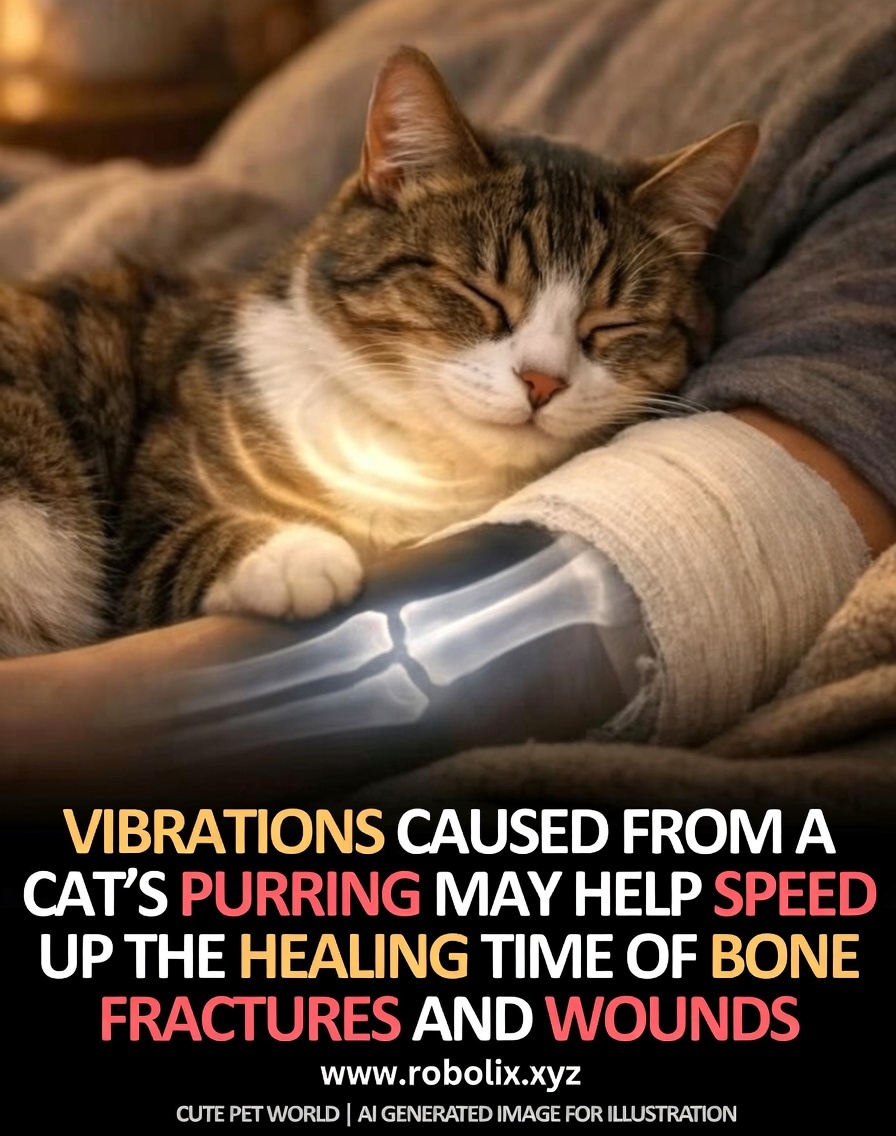
Can a Cat’s Purr Really Heal?
Exploring the Science Behind Feline Vibrations and Human Recovery
I. Introduction: The Small Sound That Feels Bigger Than Medicine
Almost every cat lover has felt it.
You are tired.
Your body hurts.
Your mind is heavy.
Then a cat climbs onto your chest, curls into a warm ball, and starts to purr.
Not loud.
Not dramatic.
Just a soft, steady vibration.
And somehow… you feel better.
Across cultures, generations, and languages, humans have whispered the same idea:
“Cats have healing powers.”
Is it just emotion?
Is it imagination?
Or is there something real — something biological, something scientific — happening inside that quiet sound?
This article explores one powerful question:
Can a cat’s purr actually support healing in the human body?
We will look at:
- What science does support
- What is still being researched
- Why cats themselves heal so well
- And why this tiny vibration may matter more than we ever realized
No magic.
No fake promises.
Just real science, explained in very easy words — and a deep reminder that healing is not always loud or fast.
Sometimes, healing sounds like a purr.
II. What Is Cat Purring, Really?
How Do Cats Purr?
For a long time, scientists were confused by purring.
Cats can purr while breathing in and breathing out.
Most animals can’t do that.
Modern research shows that purring happens because of:
- Special muscles in the larynx (voice box)
- A neural oscillator in the brain that sends rhythmic signals
- Rapid opening and closing of the vocal cords
This creates vibration — not just sound.
The Frequency of a Cat’s Purr
A cat’s purr usually falls between 25 and 150 Hertz (Hz).
That number matters. A lot.
Why?
Because these frequencies overlap with ranges used in medical vibration therapy.
This is where things start getting interesting.
Why Do Cats Purr When They’re Hurt?
Cats don’t only purr when they’re happy.
They also purr when:
- They are injured
- They are stressed
- They are giving birth
- They are dying
This tells scientists something important:
Purring is not just pleasure.
Purring may be survival.
III. The Science of Healing Vibrations
A. Vibration Therapy in Modern Medicine
Vibration therapy is not new.
Doctors and researchers use low-frequency vibrations to help with:
- Bone density loss (osteoporosis)
- Muscle recovery
- Physical rehabilitation
- Circulation improvement
NASA even studied vibration therapy to prevent bone loss in astronauts living in zero gravity.
These machines are carefully calibrated to specific frequencies.
And here’s the shocking part:
Many of those frequencies match a cat’s purr.
B. Why Frequency Matters
Different frequencies affect the body differently.
Research shows that low-frequency vibrations can:
- Stimulate bone cells (osteoblasts)
- Improve tissue repair
- Reduce inflammation
- Increase blood flow
Cats naturally produce these frequencies — without machines, wires, or electricity.
Just biology.
IV. Evidence Linking Cat Purring to Healing
What Studies Suggest
Let’s be clear and honest.
There is no study proving that a cat can heal a broken human bone by purring.
But there are studies showing:
- Bones exposed to certain low-frequency vibrations heal faster
- Animals exposed to vibration therapy recover more efficiently
- Stress reduction directly improves immune response and wound healing
What’s Special About Cats?
Cats:
- Heal fractures faster than dogs
- Have fewer complications after bone injuries
- Maintain bone strength even with low physical activity
Scientists believe purring may help cats:
- Heal while resting
- Conserve energy
- Repair tissues internally
This does not prove cause — but the correlation is strong enough that researchers keep studying it.
V. Psychological and Physiological Benefits for Humans
A. Stress Reduction: The Hidden Healing Power
Stress is one of the biggest enemies of healing.
High stress:
- Raises cortisol
- Weakens immunity
- Slows wound repair
- Increases pain perception
Studies show that listening to a cat’s purr:
- Lowers stress levels
- Slows heart rate
- Creates a sense of safety
When stress goes down, the body heals better.
This is not poetry.
This is biology.
B. The Hormone Connection
When humans interact with cats:
- Oxytocin increases (bonding hormone)
- Blood pressure lowers
- Anxiety decreases
Oxytocin is known to:
- Reduce pain
- Support tissue repair
- Improve emotional resilience
Healing is not only physical.
The nervous system matters.
VI. Can Cat Purring Heal Human Bones and Wounds?
What Science Supports
✔ Stress reduction
✔ Pain relief
✔ Emotional comfort
✔ Improved healing environment
What Science Does NOT Claim
✘ Cats replace doctors
✘ Purring heals fractures directly
✘ Medical treatment is unnecessary
The truth is simple:
A cat’s purr is not medicine.
But it may support the body’s natural ability to heal.
And that matters more than people think.
VII. Why Cats Might Heal Themselves This Way
From an evolutionary perspective, purring is genius.
Wild cats:
- Can’t show weakness
- Can’t afford long recovery times
- Need to heal quietly
Purring allows:
- Bone stimulation without movement
- Healing during rest
- Energy conservation
Nature doesn’t waste energy.
If purring had no benefit, it would not exist.
VIII. Real-Life Observations and Therapy Cats
Around the world:
- Therapy cats visit hospitals
- Hospice programs use cats for comfort
- Elderly patients show reduced anxiety around cats
Doctors don’t prescribe cats.
But they don’t stop them either.
Because healing is not always about fixing — sometimes it’s about supporting.
IX. Common Myths (Let’s Clear Them)
❌ “Cats cure diseases”
❌ “Purring works instantly”
❌ “More purring = more healing”
Truth:
- Healing is complex
- Purring is supportive, not magical
- The body still needs proper care
Respect the science — and the mystery.
X. Practical Takeaways for Cat Owners
If you have a cat:
- Spend quiet time together
- Let the purr slow your breathing
- Use it as relaxation, not treatment
If you’re injured or ill:
- See a doctor
- Follow medical advice
- Let your cat be emotional support
Healing works best when science and comfort work together.
XI. Future Research and Possibilities
Scientists are exploring:
- Vibration-based medical devices inspired by purring
- Non-invasive healing therapies
- Sound-based stress treatments
Cats may not be doctors.
But they may be teachers.
XII. Conclusion: The Quiet Power of a Purr
In a loud world full of pills, machines, and noise, healing sometimes comes quietly.
A warm body.
A steady vibration.
A reminder that you are not alone.
A cat’s purr will not replace medicine.
But it may remind your body how to heal itself.
And maybe — just maybe — the smallest sounds carry the deepest wisdom.
Leave a Reply