
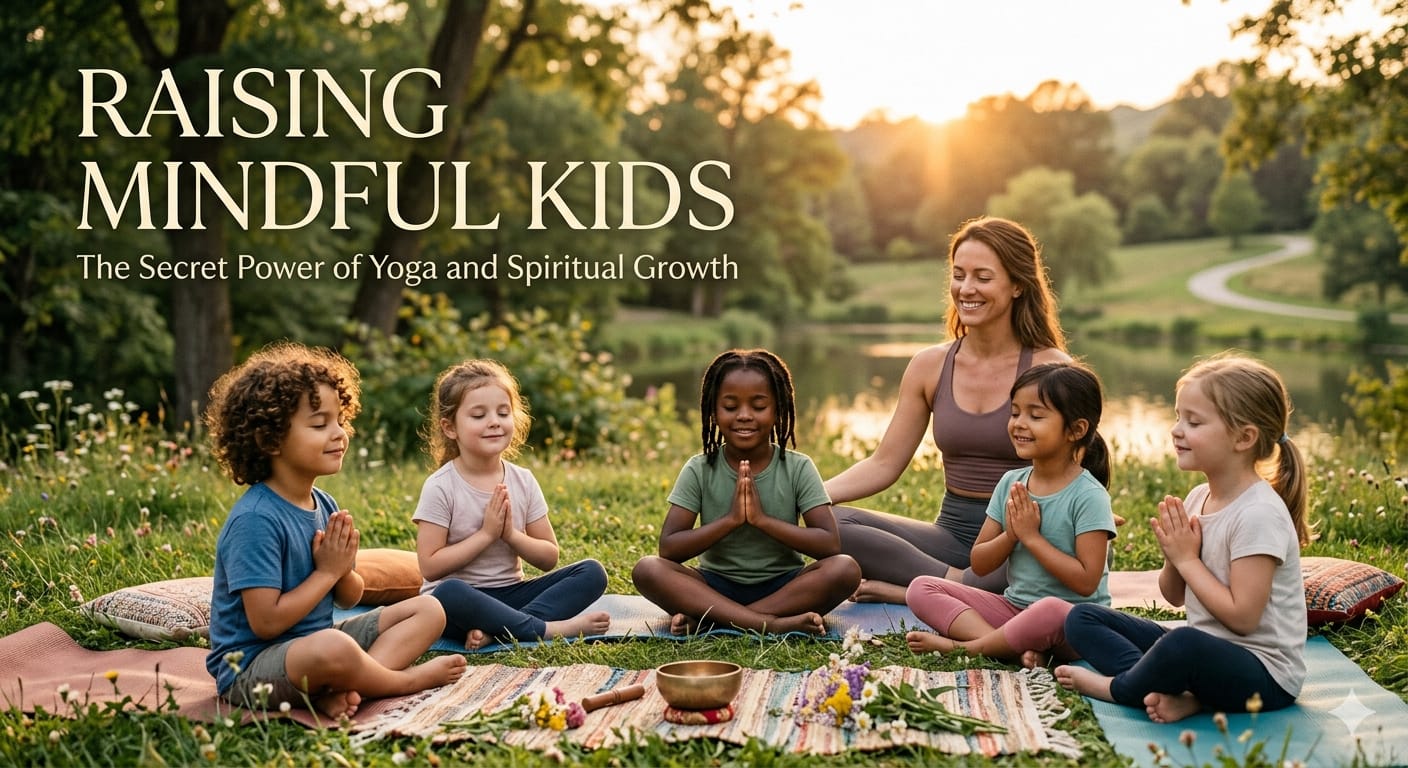
Raising Mindful Kids: The Secret Power of Yoga and Spiritual Growth
A Complete Parents’ Guide to Building Calm, Focused, and Happy Children
In today’s fast and busy world, children are growing up with more stress, distractions, and pressure than ever before. From school competition to mobile addiction, many kids are slowly losing their natural calmness, focus, and happiness.
As parents, this question comes again and again:
How can we raise children who are peaceful, confident, and emotionally strong?
The answer is simple but powerful:
Yoga and spiritual growth.
This is not only about exercise or religion. It is a complete lifestyle that helps children grow strong in body, calm in mind, and kind in heart.
This guide is written in very easy and practical language. You will learn not only what to do, but also how to do it step by step in real life.
What Does “Mindful Kids” Really Mean?
A mindful child is not perfect. A mindful child is someone who:
- Understands their feelings
- Stays calm in difficult situations
- Focuses better
- Treats others with kindness
Mindfulness helps children live in the present moment instead of being lost in stress or distractions.
Why Yoga Is Becoming a Must for Kids
Earlier, yoga was only for adults. But now parents are realizing something important.
Children who practice yoga are:
- More focused in studies
- Less angry
- Emotionally strong
- Less addicted to screens
Yoga is not just exercise. It is a life skill.
The Real Secret: Don’t Force, Let Them Experience
Most parents say:
“Do yoga, it is good for you.”
But children don’t learn from instructions.
They learn from what they see and feel.
So instead of forcing, your goal should be to create interest and curiosity.
Step-by-Step Parent Guide: How to Bring Your Child Towards Yoga
Step 1: Start With Yourself
Ask yourself honestly:
- Do I stay calm when I am angry?
- Do I use my phone too much?
Children copy parents.
What to do:
- Do 5–10 minutes of yoga daily in front of your child
- Sit quietly for a few minutes
You don’t need to explain.
Let them observe.
Step 2: Make It Fun, Not Serious
If yoga feels like homework, your child will avoid it.
Make it fun:
- Use names like “tree pose”, “cat pose”
- Act like animals
- Play soft music
Rule: Fun first, discipline later.
Step 3: Start Very Small
Don’t start with long sessions.
Begin with:
- 5 minutes only
- 2–3 simple poses
- 1 breathing exercise
Small steps bring long-term success.
Step 4: Use Storytelling
Children love stories more than instructions.
Instead of saying “meditate”, say:
“Close your eyes and imagine you are sitting near a peaceful river…”
This builds calmness naturally.
Step 5: Teach Breathing as a Superpower
Tell your child:
“When you feel angry, you have a secret power—your breath.”
Practice:
- Slow inhale
- Slow exhale
This helps control anger and stress.
Step 6: Create a Simple Routine
Children feel safe with routines.
Daily plan:
- Morning: 5–10 min yoga
- Evening: breathing or quiet time
- Night: gratitude
Consistency is more important than perfection.
Step 7: Appreciate, Don’t Force
Never criticize.
Instead say:
“You are doing great.”
Encouragement builds confidence and interest.
The Role of Spiritual Growth
Spirituality is not about strict rules.
It is about building a strong inner world.
Teach children:
- Gratitude
- Kindness
- Respect
- Inner peace
Easy Daily Practices
- Say “thank you” before meals
- Help others
- Spend quiet time
- Share moral stories
These small habits shape character.
Scientific Benefits of Yoga and Mindfulness
Modern science supports these practices.
Research shows:
- Deep breathing calms the nervous system
- Meditation improves brain function
- Yoga reduces stress hormones
Simple understanding:
Yoga trains the brain just like exercise trains the body.
The Power of Breath (Simple Practice)
Breathing is the easiest tool.
Exercise:
- Sit comfortably
- Inhale slowly through the nose
- Exhale slowly
Do this for 5 minutes daily.
Benefits:
- Reduces anger
- Improves focus
- Brings peace
Food and Behavior: What Your Child Eats Matters
Food directly affects mood and focus.
Healthy Choices
- Fruits and vegetables
- Milk, nuts
- Home-cooked meals
Avoid
- Junk food
- Too much sugar
- Processed snacks
Unhealthy food can increase irritation and reduce concentration.
Screen Time: The Biggest Challenge Today
Too much screen time causes:
- Poor focus
- Sleep problems
- Anger and irritation
Smart Solution
- Reduce slowly, not suddenly
- Replace with fun activities
- Add yoga during breaks
Example:
“After mobile time, let’s do a fun stretch game.”
Balance is the key.
Common Mistakes Parents Should Avoid
- Forcing yoga
- Making it boring or strict
- Expecting fast results
- Comparing children
Remember:
Every child grows at their own pace.
A Simple Daily Routine for Mindful Kids
Morning
- Wake up
- 5–10 min yoga
Daytime
- Healthy food
- Study and play
Evening
- Family time
- Breathing exercise
Night
- No screens
- Gratitude or prayer
Keep it simple and consistent.
Long-Term Benefits: Why This Matters
Children raised with yoga and mindfulness become:
- Confident
- Emotionally strong
- Focused
- Kind and respectful
These qualities help them succeed in life, not just in school.
Final Words for Parents
You don’t need to be perfect.
You just need to be:
- Calm
- Patient
- Consistent
Your child is learning from you every day.
If you bring peace into your life,
your child will learn it naturally.
Yoga is not something you force.
It is something you live.
And when you live it,
your child will follow—happily, slowly, and forever.
Leave a Reply