
By Dr. Marab Sajjad
Premature Ovarian Insufficiency (POI): Understanding Early Menopause and How to Cope
Introduction: What is Premature Ovarian Insufficiency?
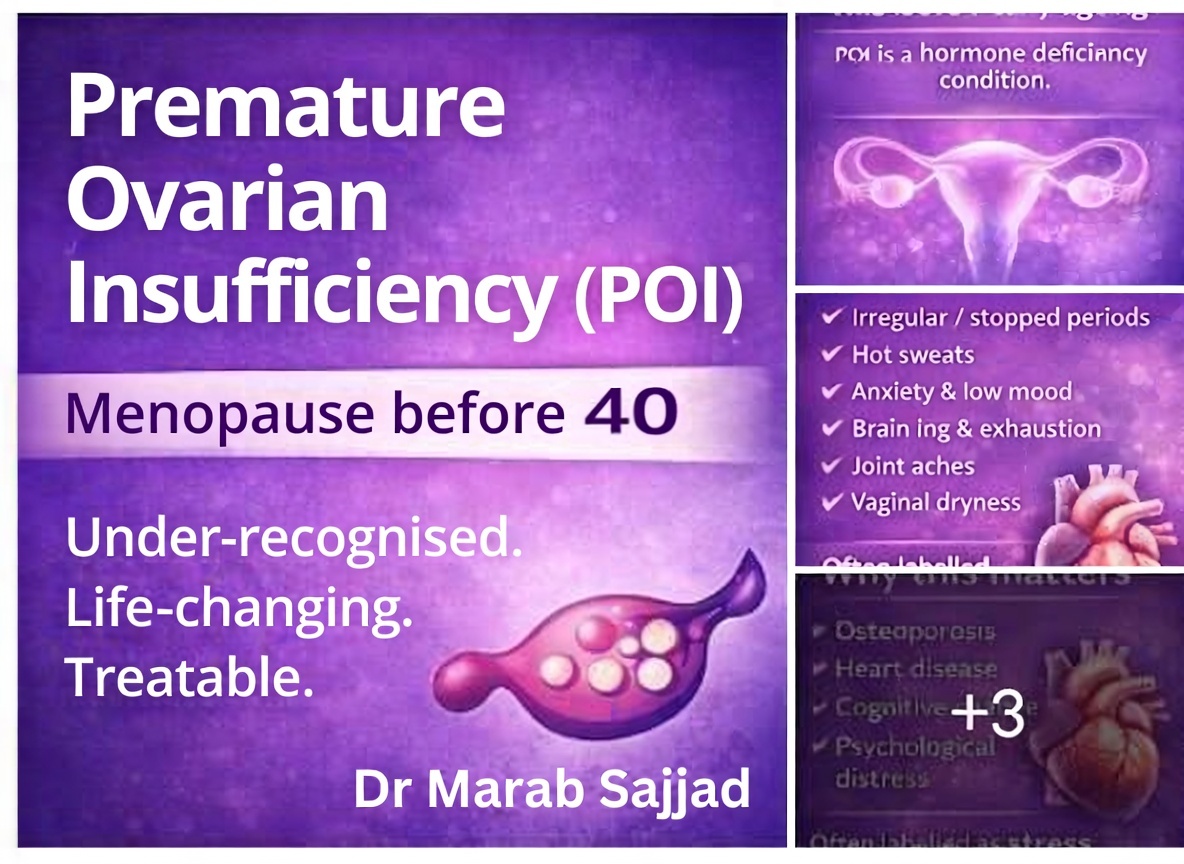
Imagine your body’s natural clock for menopause ticking much earlier than expected. This is what happens in Premature Ovarian Insufficiency (POI). POI is when the ovaries stop working properly before the age of 40. Normally, menopause happens around 50, but in POI, the body experiences early hormonal changes that affect periods, fertility, mood, and overall health.
POI is more common than many people think, but it is under-recognized. Many women experience symptoms and think it’s just stress, lifestyle, or temporary hormonal changes. The truth is, POI is life-changing, but treatable, and early awareness can make a huge difference.
In this article, we will talk about everything you need to know about POI in very simple words, including symptoms, causes, treatment, emotional support, and ways to stay healthy.
Epidemiology: How Common is POI?
POI affects about 1% of women under the age of 40. This might seem small, but it’s actually quite common, especially when you think of how few women are diagnosed early.
Typical Age of Onset
POI can start in a woman’s late 20s to late 30s, sometimes even earlier.
Risk Factors
Some women are more likely to get POI due to:
- Family history – If your mother or sister had early menopause, your chances are higher.
- Genetic conditions – Certain genes can make the ovaries stop working early.
- Autoimmune diseases – Disorders like thyroid disease or Addison’s disease can attack the ovaries.
- Medical treatments – Chemotherapy or radiation can damage ovarian tissue.
- Lifestyle and environment – Smoking, extreme stress, or toxins may increase risk.
Even if you have none of these, POI can still happen. That’s why listening to your body is so important.
Causes of POI
POI happens when the ovaries stop producing enough hormones, mainly estrogen, and stop releasing eggs regularly. The causes can be divided into four main types:
1. Genetic Causes
Some women are born with genetic differences that affect the ovaries.
- Turner syndrome – A condition where one of the X chromosomes is missing or partially missing.
- Fragile X premutation – A gene change that can affect ovarian function.
2. Autoimmune Disorders
Sometimes the body’s immune system attacks the ovaries, thinking they are harmful. This can happen in diseases like:
- Thyroid disorders
- Addison’s disease
- Other autoimmune conditions
3. Medical Treatments
Certain treatments for cancer or other serious illnesses can harm the ovaries.
- Chemotherapy and radiation are the main causes.
- Surgery that removes ovaries or ovarian tissue can also cause POI.
4. Unknown Causes
In many cases, doctors cannot find a specific cause. This is called idiopathic POI.
Even if the cause is unknown, the condition can be managed effectively with treatment and lifestyle changes.
Symptoms of POI
POI affects your body in many ways because of hormonal imbalance. Here are the common symptoms:
1. Menstrual Irregularities
- Periods may become irregular or stop completely (amenorrhea).
- Some women have only a few periods in a year.
2. Hormonal Symptoms
- Hot flashes – sudden warmth, sweating, flushing
- Night sweats – disrupt sleep
- Vaginal dryness – can make sex uncomfortable
3. Psychological and Cognitive Effects
- Mood swings, anxiety, or depression
- Brain fog and fatigue – feeling tired and forgetful
4. Physical Symptoms
- Joint aches and muscle pain
- Low energy levels
5. Fertility Problems
- Difficulty conceiving is a major concern for women with POI.
- Early menopause reduces the chance of natural pregnancy.
Even though these symptoms can be challenging, the good news is they are manageable with proper care and support.
Diagnosis: How is POI Detected?
POI can be hard to detect because early symptoms are subtle and often mistaken for stress or lifestyle issues. Doctors use several steps to diagnose POI:
1. Medical History and Physical Examination
- Ask about menstrual cycles, family history, and symptoms.
- Examine general health and signs of hormone deficiency.
2. Laboratory Tests
- FSH (Follicle Stimulating Hormone) – usually high in POI
- Estradiol – usually low, showing low estrogen levels
3. Ultrasound Imaging
- Check ovarian reserve (number of eggs in the ovaries)
- Look for structural abnormalities
4. Exclusion of Other Conditions
- Rule out other causes of amenorrhea like thyroid problems or excessive exercise.
Early diagnosis is important because timely treatment improves quality of life and prevents long-term health problems.
Why POI Matters: Long-Term Health Risks
POI is not just about missing periods—it has serious long-term effects because estrogen levels drop early.
1. Osteoporosis
- Low estrogen weakens bones
- Increases risk of fractures
2. Heart Disease
- Early menopause raises the risk of heart attacks and strokes
3. Cognitive Decline
- Some studies show a link between early menopause and memory issues
4. Psychological Impact
- Anxiety, depression, and low self-esteem
- Feeling different or isolated
Understanding these risks helps women take preventive steps and live healthier lives.
Treatment and Management of POI
The good news is POI is treatable, and many women live full, healthy lives. Treatment focuses on symptom relief, hormone balance, and fertility support.
1. Hormone Replacement Therapy (HRT)
- Replaces missing estrogen and progesterone
- Helps with:
- Hot flashes
- Vaginal dryness
- Protecting bones and heart health
- HRT is safe for most women under 40 with POI
2. Fertility Options
- Egg donation – a popular option for women wanting children
- IVF (in vitro fertilization) – sometimes possible if some ovarian function remains
3. Lifestyle and Supportive Measures
- Exercise regularly – strengthens bones and heart
- Healthy diet – calcium, vitamin D, and protein
- Avoid smoking and excessive alcohol
4. Mental Health Support
- Counseling or therapy to cope with emotional challenges
- Joining support groups for women with POI
Coping and Emotional Support
Living with POI can feel overwhelming, but you are not alone. Emotional support is crucial.
- Talk openly with friends, family, or a counselor
- Connect with support groups – online or local
- Educate yourself – knowledge empowers you to take control
- Stay positive and motivated – remember, treatment can improve your life
Prevention and Early Detection
While POI cannot always be prevented, early detection is key:
- Know your family history
- Pay attention to changes in periods
- Seek medical advice for irregular cycles or unusual symptoms
- Regular check-ups for high-risk individuals
Early awareness can prevent complications and improve long-term health.
Conclusion: Living Well with POI
Premature Ovarian Insufficiency is life-changing, but it doesn’t define your life. With the right treatment, lifestyle changes, and emotional support, women with POI can:
- Manage symptoms effectively
- Maintain bone, heart, and mental health
- Achieve pregnancy through fertility options
- Lead a full, meaningful life
If you notice irregular periods, hot flashes, or fatigue, don’t ignore them. Listen to your body and consult a doctor early. Awareness, care, and support are the keys to thriving despite POI.
Remember: You are strong, and your health is worth prioritizing. POI is a challenge, but it can be managed successfully.
Leave a Reply