
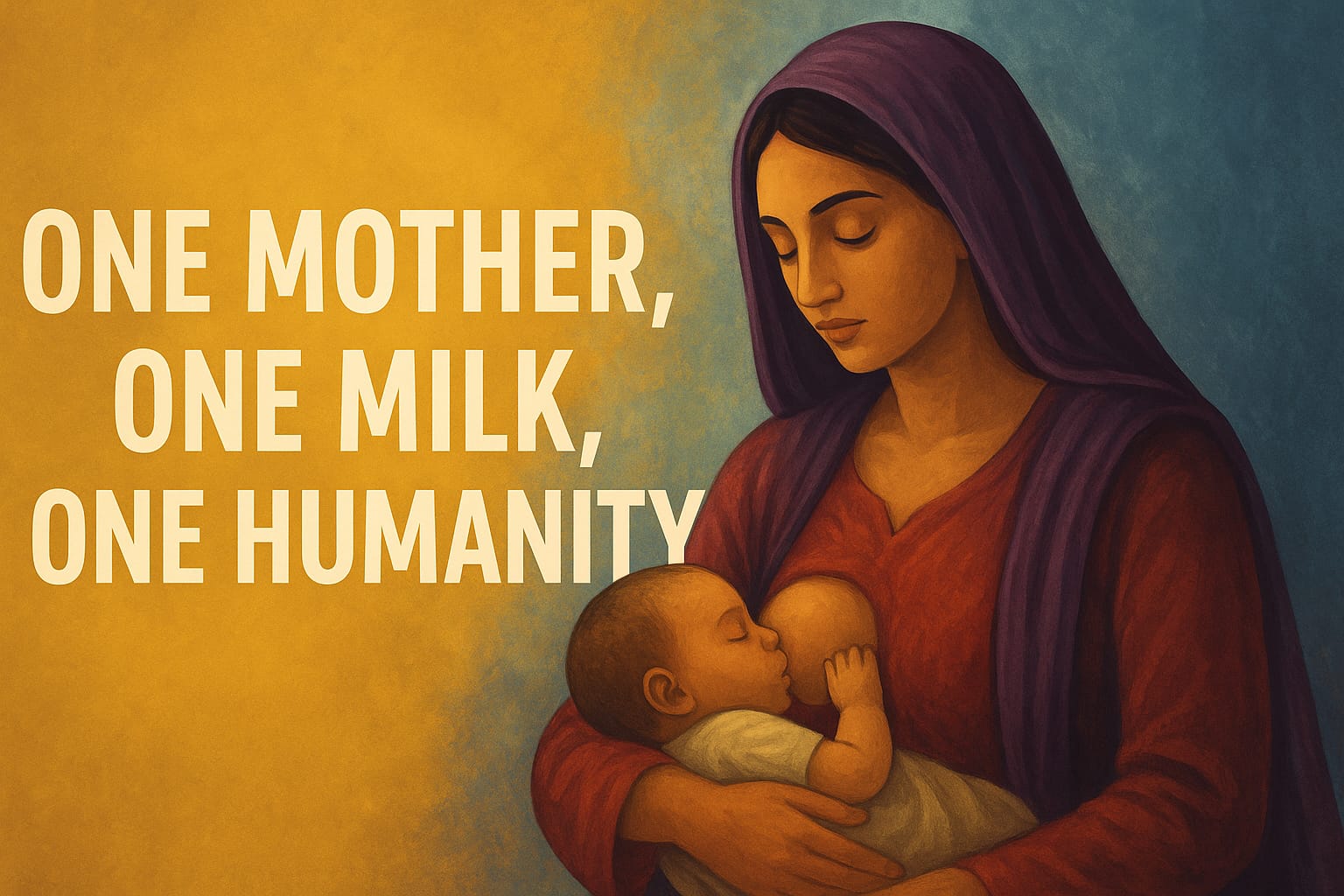
Mother’s Milk: Nature’s First Gift to a Baby
When a baby is born, the very first food that nature provides is mother’s milk, also called mother feed or breast milk. It is often said to be liquid gold because it is full of nutrition, protection, and love. But have you ever wondered, how does a woman’s body make this milk? Let’s explore this beautiful process step by step.
What is Mother Feed?
Mother feed means breast milk given by a mother to her baby. It is not just food—it is complete care in liquid form. Mother’s milk contains:
- All essential nutrients (proteins, fats, vitamins, carbohydrates)
- Antibodies that protect the baby from infections
- Hormones and enzymes that help in growth and digestion
- Perfect balance of water and food, so the baby does not need anything else for the first six months
How Does a Woman’s Body Produce Milk?
The process of making milk in a woman’s body is truly amazing. It is a mix of hormones, body changes, and baby’s demand.
1. Changes During Pregnancy
- During pregnancy, a woman’s breasts prepare themselves for feeding.
- Hormones like estrogen and progesterone make the breast tissue grow.
- Special milk-making glands, called alveoli, are developed.
2. Role of Hormones
Two main hormones play the biggest role:
- Prolactin → This hormone tells the glands to produce milk.
- Oxytocin → This hormone helps in releasing the milk when the baby suckles.
3. The “Let-Down Reflex”
When the baby starts suckling, tiny nerves in the nipple send signals to the brain. The brain releases oxytocin, and milk flows out of the breast. This is called the let-down reflex.
The Types of Mother’s Milk
Mother’s milk changes according to the baby’s needs:
- Colostrum (First Milk) – Thick, yellowish milk in the first few days. It is very rich in antibodies and protects the baby like a vaccine.
- Transitional Milk – After a few days, milk becomes thinner and more in quantity.
- Mature Milk – This is the regular milk that continues for months. It has just the right mix of water, fat, and nutrients.
Why is Mother Feed Important?
- Helps the baby grow healthy and strong
- Protects from diarrhea, cough, cold, and infections
- Makes the bond between mother and baby stronger
- Easy to digest and always available, at the right temperature
- Helps the mother too—it reduces the risk of breast cancer and helps her body recover after birth
Some Amazing Facts
- Mother’s milk changes taste based on what the mother eats.
- It adjusts automatically to the baby’s needs—milk for a newborn is different from milk for a 6-month-old.
- Even premature babies get milk specially designed by the mother’s body for their growth.
Final Words
Mother feed is not just food; it is nature’s perfect recipe for life. The way a woman’s body produces milk is a miracle of nature. Every drop carries love, care, and health for the little one.
So, whether you are a new mother, an expecting mom, or simply someone curious—remember that breast milk is the best start a baby can ever have.
✨ Mother’s milk: natural, magical, and irreplaceable.
Mother’s Feed (Breast Milk): What Science Says — A Simple, Friendly Guide
What do scientists say in general?
Across many countries, health experts agree:
- Breast milk is the best first food for almost all babies.
- It gives nutrition + protection at the same time.
- It helps the mother’s health too.
- Big groups like the World Health Organization (WHO) recommend only breast milk for the first 6 months, then adding family foods while continuing breastfeed up to 2 years or more.
(Note: Some babies and mothers have medical reasons not to breastfeed. That’s okay. Fed baby = loved baby.)
What is inside breast milk? (The “science mix”)
Breast milk is a smart liquid. It changes with time and with baby’s needs.
- Carbohydrate: Mainly lactose — energy for the brain.
- Fat: Healthy fats, including DHA, for brain and eye growth.
- Protein: Gentle proteins like whey and casein for growth.
- Vitamins & minerals: Like a built-in multivitamin (vitamin D may still need drops—ask your doctor).
- Antibodies & immune cells: Tiny bodyguards (IgA, lactoferrin, living white blood cells).
- HMOs (Human Milk Oligosaccharides): Special sugars that feed good gut bacteria and block germs.
- Enzymes & hormones: Help digestion, sleep patterns, and appetite control.
How does the body make milk? (Easy biology)
- During pregnancy, hormones build the milk factory in the breast.
- After birth, the placenta comes out → progesterone drops → prolactin says “make milk.”
- When baby suckles, nerves in the nipple send a signal to the brain → oxytocin squeezes milk out.
- More milk removed = more milk made. Less removed = body slows down.
This milk-release is called the let-down reflex. Some feel tingling, some do not—both are normal.
Types of milk over time
- Colostrum (Days 1–3): Thick, yellow, super rich in antibodies. “Baby’s first vaccine.”
- Transitional milk (Days 4–14): More volume, still protective.
- Mature milk (After ~2 weeks): Stable, but still changes during a feed:
- Foremilk: More water for thirst.
- Hindmilk: More fat for fullness and growth.
What does research say about benefits for the baby?
1) Fewer infections
Babies who get breast milk usually have lower risk of diarrhea, ear infections, chest infections, and some hospital visits. That’s the immune system from milk doing its job.
2) Gut health
HMOs in milk feed good bacteria (like Bifidobacteria). A balanced gut can help digestion and may reduce tummy troubles.
3) Brain development
Breast milk has DHA, choline, and other brain helpers. Studies often show small but meaningful advantages in thinking and learning later on (many other things matter too, like play, love, and safety).
4) Allergy & long-term health
Breastfeeding may reduce eczema and wheezing in some kids. It is also linked with a healthier weight later in childhood.
5) Preterm babies
For babies born early, mother’s milk or donor human milk lowers the risk of serious gut disease (NEC) and supports growth.
What does research say about benefits for the mother?
- Faster recovery after birth: Oxytocin helps the uterus shrink and may reduce bleeding.
- Lower cancer risk: Breastfeeding is linked with lower breast and ovarian cancer risk later in life.
- Metabolism: It uses extra calories and is connected with lower risk of type 2 diabetes after pregnancy, especially helpful for moms who had gestational diabetes.
- Convenience & bonding: Always ready, right temperature, skin-to-skin contact builds closeness.
How do scientists study breastfeeding? (In simple words)
- Randomized trials are hard here (you can’t randomly force or stop feeding choices).
- So most evidence comes from cohort studies (following families over time) and case-control studies (comparing groups).
- Researchers try to adjust for other factors (like family income, mom’s education, smoking, early sickness), but not everything can be perfectly controlled.
- Even with these limits, the pattern is very consistent: breastfeeding shows many benefits.
Common myths vs. facts
- Myth: “My milk is too thin.”
Fact: Thinner milk at the start of a feed is normal foremilk. Fat-rich hindmilk comes later. - Myth: “Small breasts mean low milk.”
Fact: Breast size doesn’t predict supply. Milk supply depends mostly on frequent removal. - Myth: “Baby needs water in hot weather.”
Fact: In the first 6 months, breast milk already has enough water. More nursing is enough (unless a doctor says otherwise). - Myth: “Formula is exactly the same as breast milk.”
Fact: Infant formula is a safe alternative and nourishes babies well, but it can’t copy living immune cells, antibodies, and HMOs.
When breastfeeding is hard (and what science suggests)
Many mothers face challenges. You are not alone, and you are not failing.
- Latching pain / cracked nipples: Often improved by position & latch help from a lactation consultant.
- Low supply worries: Frequent, effective removal (baby or pump), skin-to-skin, and night feeds can help.
- Engorgement / blocked ducts: Warmth before feeding, gentle massage, complete emptying, and cold packs after.
- Mastitis (breast infection): Rest, keep removing milk, and see a doctor; antibiotics are sometimes needed and usually breastfeeding continues.
Pumping, storage, and donor milk (science basics)
Pumping:
- Helps maintain or increase supply; useful if baby is sleepy, premature, or mom is at work.
Safe storage (typical guidance):
- Room temperature: about 4 hours is common advice.
- Refrigerator: up to 4 days.
- Freezer: about 6 months best, up to 12 months acceptable.
(Exact times can vary a little by guideline; label date/time and keep things clean.)
Donor milk:
- If a mother’s own milk is not available, pasteurized donor human milk from a regulated milk bank is a safe option for some babies, especially preterm.
Diet and lifestyle for milk quality
- Eat a balanced diet (grains, protein, fruits, veggies, healthy fats).
- Drink to thirst (no need to force extra water).
- Most medicines: many are compatible with breastfeeding—ask a healthcare provider.
- Nicotine and heavy alcohol are not safe for baby; limit/avoid and ask for help if needed.
- Caffeine: small amounts are usually fine; watch baby for fussiness.
Environment & cost (often forgotten science)
- Breastfeeding is low-waste and low-carbon (no tins, no transport).
- It also saves money for families.
Key takeaways (the “sticky notes”)
- Breast milk = food + medicine designed by nature.
- It changes to match baby’s age and needs.
- Studies show fewer infections, better gut health, and long-term gains for many children.
- Mothers also benefit: recovery, lower cancer risk, metabolic health.
- Not every family can breastfeed. Loving, responsive feeding—breast or bottle—raises healthy, happy children.
- For medical questions or special cases, talk to a healthcare professional.
Simple action plan for new parents
- Skin-to-skin right after birth if possible.
- Offer the breast early and often (8–12 times in 24 hours at first).
- Watch baby’s cues, not the clock.
- Make sure deep latch (painless feeding, steady swallows).
- If worried about weight, pain, or supply, get help early (lactation consultant, midwife, pediatrician).
- If you choose formula, learn safe prep and pace the bottle. Love and closeness matter most.
Warm note to end:
Science is clear: mother’s feed is powerful. But science is also kind: it understands real life. Whatever your path, you are doing your best for your baby. You are enough.
1. Quranic Verses about Breastfeeding
Islam highlights breastfeeding as a beautiful bond and duty. Here are two key verses (since there aren’t many directly about feeding). I’ll share them in Arabic, with English and Urdu translations.
1. Surah Al-Baqarah 2:233
Arabic:
وَالْوَالِدَاتُ يُرْضِعْنَ أَوْلَادَهُنَّ حَوْلَيْنِ كَامِلَيْنِ لِمَنْ أَرَادَ أَن يُتِمَّ الرَّضَاعَةَ
English: “Mothers may breast-feed their children two full years, for those who wish to complete the nursing.” (IFANCA, Wikipedia)
Urdu: “مائیں اپنے بچوں کو پوری دو سال تک دودھ پلائیں، جو دودھ پلانا مکمل کرنا چاہے۔”
2. Surah Al-Mu’minun 23:21 (used in a prayer context)
Arabic:
وَإِنَّ لَكُمْ فِي الْأَنْعَامِ لَعِبْرَةً نُسْقِيكُم مِّمَّا فِي بُطُونِهَا…
English: “And indeed, for you in grazing livestock is a lesson — We give you to drink from what is in their bellies…” (Al-Islam.org)
Urdu: “اور بے شک تمہارے لیے اُن چارپایوں میں سبق ہے — ہم تمہیں اُن کے اندر سے پلانے والی چیز دیتے ہیں…”
Though only these two verses relate directly, they carry deep meaning about Allah’s mercy and sustenance through mothers.
2. 99 Beautiful Names of Allah (Asma-ul-Husna) to Pray for More Milk
While all names of Allah are powerful, here are a few especially meaningful for this situation:
- Ar-Razzaq (The Provider)
- Al-Mu’een (The Helper)
- Al-Wahhab (The Bestower)
- Al-Matin (The Firm, Strong)
- Al-Shafi’ (The Healer)
- Ar-Raheem (The Most Merciful)
- Al-Wadud (The Loving)
- Al-Fattah (The Opener)
- Al-Haleem (The Forbearing)
- Al-Ghaffar (The Oft-Forgiving)
You can softly call upon these names in your heart or make dua like: “Ya Razzaq, grant me ease and plentiful milk for my baby, Ameen.”
3. Muslim Prayer Positions or Practices to Increase Breast Milk
There isn’t a specific Islamic prayer posture strictly for milk increase—however, general spiritual acts help, such as:
- Saying “Bismillah ar-Rahman ar-Raheem” (In the name of Allah, Most Gracious, Most Merciful) before feeding brings blessings. (Al-Islam.org)
- Some traditions mention writing verses (like from Surah Al-Hijr or Al-Mu’minun) with saffron or rose water, washing it, and drinking the water. These are spiritual aids, not replacements for nursing. (Al-Islam.org, Dua)
Key idea: Combine spiritual prayer with practical action—feed often, stay calm, trust Allah’s mercy and provision.
4. Prophetic 7-Day Diet Plan to Support Breast Milk
Drawing from Prophetic foods and Islamic wellness:
Foods known in Sunnah (Prophetic tradition):
| Day | Foods Before Sleep (Suhoor/Evening) | Main Meal | Extras & Habits |
|---|---|---|---|
| 1 | A glass of milk with honey | Dates + wholesome soup and whole grain bread | Drink water often |
| 2 | Oat porridge with chopped dates | Steamed vegetables, olive oil, whole grain | Add almonds or nuts |
| 3 | Talbina (barley, milk, honey) | Chickpea stew with bread | Sip water and stay calm |
| 4 | Dates with black seed sprinkled | Vegetable soup with garlic, olive oil | Offer the baby more feeds |
| 5 | Smoothie of milk, honey, a few dates | Lentil soup, whole grain, greens | Keep hydrated, rest well |
| 6 | Milk + crushed almonds | Steamed fish or lean protein, whole grain | Gentle dua, call any of Allah’s names |
| 7 | Oatmeal or barley porridge with honey | Date & vegetable soup, wholesome bread | Reflect, relax, feed with love |
This plan blends Sunnah foods with modern lactation helpers (dates, oats, whole grains). (IFANCA, FROMMUMMYTONAYEL, verywellfamily.com, Roohts)
5. Putting It All Together: Islamic & Practical Steps
- Step 1: Make spiritual intention. Begin feeding with “Bismillah ar-Rahman ar-Raheem.” Feel Allah’s mercy.
- Step 2: Eat nourishing Sunnah-based foods. Follow simple eating plan above.
- Step 3: Hydrate well. Drink water throughout the day.
- Step 4: Feed often. Let your body know to make more milk.
- Step 5: Make dua. Use beautiful names of Allah like Ar-Razzaq, Al-Mu’een. Speak gently to Allah: “O Allah, Ya Razzaq, open my provision”—Ameen.
- Step 6: Trust Allah and seek support. Be gentle with yourself; your love matters most.
Intimacy and Breastfeeding: A Simple Guide for Couples
When a baby is born, life changes for both the mother and father. The mother’s body is healing, she is feeding the baby day and night, and the couple’s daily routine looks very different. During this time, many couples wonder: “How will intimacy work now that I am breastfeeding?”
This article will give you clear, kind, and easy guidance.
1. Healing After Birth
- After giving birth, a woman’s body needs time to heal.
- Doctors usually say wait about 6 weeks before having sexual intimacy.
- Every woman is different. Some may need more time, especially after a C-section or stitches.
- Talk openly with your doctor before starting again.
2. Breastfeeding and Hormones
Breastfeeding changes hormones in the body:
- Prolactin (milk hormone) makes the body focus on milk and baby care.
- Oxytocin (love hormone) flows during both intimacy and breastfeeding, helping with bonding.
- Because of these hormones, some mothers may feel less desire for sex for a while. This is normal and not forever.
3. Is Intimacy Safe While Breastfeeding?
Yes, intimacy is safe after the doctor says healing is complete.
- Breastfeeding does not harm intimacy and intimacy does not harm breastfeeding.
- A woman’s milk will not “go bad” because of intimacy. Milk stays pure for the baby.
- Sometimes, a small milk leak may happen during closeness. This is natural. A towel or bra can help.
4. Common Feelings Mothers Have
- Tiredness: Feeding a baby day and night can be exhausting.
- Body changes: Breasts may feel fuller, heavier, or sensitive.
- Less interest: Because of hormones and lack of sleep, desire may be low.
- Need for gentleness: A mother may need more care, love, and patience from her husband.
All of these are normal. They do not mean something is wrong with the relationship.
5. What Fathers Should Understand
- Your wife’s body is working very hard — healing, producing milk, and caring for the baby.
- Show patience, kindness, and support.
- Help with baby care so she feels rested.
- Intimacy is not just physical — hugs, kind words, and listening are also important.
6. Tips for Couples
- Talk openly: Share feelings without shame.
- Take it slow: Start with gentle closeness, hugging, and kissing.
- Choose the right time: When the baby is asleep and both feel calm.
- Keep breasts comfortable: Some mothers wear a soft bra during intimacy to avoid leaks.
- Use lubrication if needed: Breastfeeding hormones can make natural moisture less. A doctor-recommended lubricant may help.
7. Emotional Intimacy
Remember, intimacy is not only physical.
- Pray together.
- Share your worries.
- Enjoy small moments like tea together, watching a show, or laughing.
These small acts build love and trust.
8. When to Seek Help
- If pain continues for a long time.
- If the mother feels very low, anxious, or uninterested for many months.
- If either partner feels distant or frustrated.
A doctor, midwife, or counselor can give safe advice.
Final Words
Breastfeeding is a special time full of love and care for the baby. But it also affects intimacy for couples. With patience, gentle communication, and support, couples can stay close and loving. Remember: this is just a season of life. As the baby grows, energy and balance return.
Intimacy after birth is a journey — slow, kind, and filled with understanding.
✨ Dear parents: Take it easy, talk with each other, and trust that love will grow stronger in this new chapter of life.
Breastfeeding and Intimacy: Guidance from Different Religions
When a new baby arrives, a mother’s body and family life change in many ways. She gives milk, she heals, and the couple’s closeness also changes. Many couples wonder: “How do we keep love, intimacy, and faith together while breastfeeding?”
Religions around the world talk about motherhood, breastfeeding, family love, and care between husband and wife. Let’s look at what the holy books say, in simple words.
1. Islam
The Qur’an speaks clearly about breastfeeding.
- Surah Al-Baqarah 2:233:
“Mothers may breast-feed their children two full years, for those who wish to complete the nursing.”
Islam teaches that breastfeeding is a right for the child and a responsibility for the mother and father together. It also reminds fathers to be patient, gentle, and supportive. Intimacy after birth is encouraged once the mother has healed, but always with love and care.
2. Christianity (Bible)
The Bible speaks with kindness about mothers who nurse.
- Isaiah 66:11:
“For you will nurse and be satisfied at her comforting breasts; you will drink deeply and delight in her overflowing abundance.” - Psalm 22:9:
“Yet you are he who took me from the womb; you made me trust you at my mother’s breasts.”
Christian teaching sees breastfeeding as a blessing from God, a natural act of love. Husbands are asked to love their wives as Christ loved the church — with patience, respect, and care. This includes showing gentleness while their wives breastfeed and recover.
3. Judaism (Torah & Talmud)
The Torah and Jewish tradition also honor breastfeeding.
- Isaiah 49:15:
“Can a mother forget the baby at her breast and have no compassion on the child she has borne?”
In Jewish teaching, breastfeeding for two years is encouraged. Family intimacy is valued, but also balanced with the mother’s health and baby’s needs. Husbands are reminded to support their wives and give space for healing.
4. Hinduism (Vedas & Shastras)
Hindu texts show respect for the mother as the first teacher through breastfeeding.
- Manu Smriti 2.145:
“The mother and the father are the visible gods.” - Hindu dharma teaches that breastfeeding should continue for at least six months or more, and that a child receives both nutrition and emotional love from the mother’s milk.
In family life, Hindu traditions encourage harmony — where the husband protects and supports the wife, especially after childbirth.
5. Buddhism
Buddhism does not have direct rules on breastfeeding, but it teaches compassion and mindfulness in family life.
- The Buddha spoke often about the love of a mother:
“Just as a mother would protect her only child with her life, even so let one cultivate a boundless heart toward all beings.” (Metta Sutta)
For couples, Buddhism teaches patience, kindness, and shared responsibility. During breastfeeding, intimacy is not only physical but also emotional — helping each other, caring for the baby, and practicing love without selfishness.
6. Sikhism (Guru Granth Sahib)
The Sikh holy book also honors mothers and breastfeeding.
- Guru Granth Sahib, Ang 496:
“The mother feeds her child, giving milk from her breast. In the same way, God nourishes all beings.”
This shows that breastfeeding is sacred, like God’s care. Sikhism encourages equality between husband and wife — meaning that during this stage, a husband must be gentle, helpful, and respectful of the mother’s needs.
7. Shared Wisdom Across Religions
From Islam, Christianity, Judaism, Hinduism, Buddhism, and Sikhism, we see the same wisdom:
- Breastfeeding is holy — a gift from God, nature, or the divine.
- The mother deserves rest, respect, and love.
- The father must support — with patience, kindness, and practical help.
- Intimacy is more than physical — it is emotional closeness, prayer, and shared care for the baby.
Practical Guidance for Couples (Simple Steps)
- Talk openly: Share feelings about tiredness, love, and closeness.
- Be patient: Healing takes time — intimacy will return slowly.
- Show love daily: A smile, a hug, a kind word is also intimacy.
- Balance faith & life: Read holy verses together, pray for each other, and trust God’s plan.
- Care for health: Eat well, rest, and stay gentle — both mother and father.
Final Words
All religions remind us that a mother feeding her baby is sacred. It is not only food — it is love, mercy, and protection. Couples should remember that intimacy after birth is a journey. With patience, faith, and gentle love, the bond between husband and wife can become even stronger in this new chapter of life.
✨ Takeaway: Breastfeeding is worship, intimacy is love, and both are blessings from the Divine.
🌍 A Conclusion for All Humanity
Dear brothers and sisters,
Life is short. We all drink milk from our mothers. We all grow with love. We all need care. From the first drop of mother’s feed to the last breath of our life, we are connected by one truth: humanity is one family.
No matter your religion, your language, or your color — a mother’s milk has no border, no caste, no division. It is pure. It is love. It is survival. If every human remembers this simple truth, then hatred will die, and love will rise.
Today, let us promise something big:
👉 To honor every mother.
👉 To respect every child.
👉 To support every father.
👉 To protect every family.
👉 To serve humanity as one.
The baby at the breast does not ask: “What is your race? What is your faith?”
The baby only drinks love. And love is the greatest religion.
If milk can flow endlessly from a mother’s heart, then why can’t mercy flow endlessly from all of humanity?
Stand up, my friend. Open your arms. Give love, give care, give hope. Because when you lift one life, you lift the world.
🌟 Be the reason someone smiles. Be the reason humanity wakes up. Be the reason this world changes.
This is not just an ending. This is a beginning. A storm of goodness can start with you — right now.
Humanity is waiting. Will you rise?
Leave a Reply