
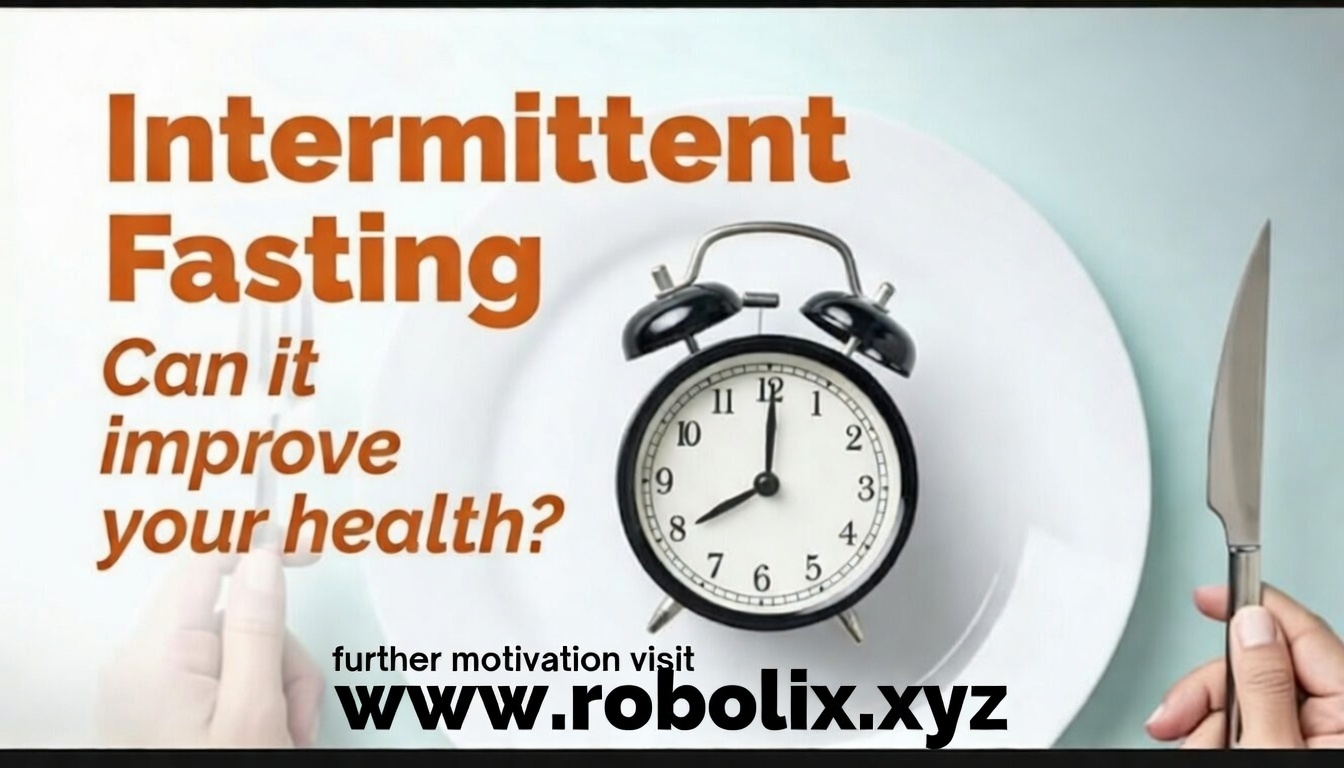
Intermittent Fasting — The Complete Truth (Science, Benefits, Methods, Myths, Spiritual Side & Real Solutions)
Introduction
Intermittent Fasting (IF) is not a diet — it is a timing strategy for eating.
For thousands of years humans did not have 3 meals a day. They ate when food was available and fasted when not. Only recently did food become constant and always available.
Today, millions of people (young & old) use intermittent fasting to improve health, lose fat, sharpen the brain, balance hormones, and increase longevity. Modern science has now proven many of these benefits.
This article is written in very easy English so everyone — men, women, young, old — can understand it.
1. What Is Intermittent Fasting? Simple Definition
Intermittent Fasting means eating only in a specific time window and fasting during the rest of the day.
It is not about what you eat — but when you eat.
Examples of IF schedules:
- 16:8 → Fast 16 hours, eat within 8 hours
- 18:6 → Fast 18 hours, eat within 6 hours
- 20:4 → Fast 20 hours, eat within 4 hours
- OMAD → One Meal a Day (fast ~23 hrs, eat 1 hr)
2. What Happens Inside Your Body When You Fast (Scientifically Explained)
Most people eat all day. So your body uses glucose (sugar) for energy. When you fast, you switch your body to another fuel source.
Step-By-Step Body Changes
🔹 0–4 hours after eating: Body uses glucose
🔹 5–12 hours: Insulin drops & fat burning slowly starts
🔹 12–16 hours: Body enters deeper fat burning
🔹 16–24 hours: Autophagy begins — cleaning of old, damaged cells
Autophagy is a key term — it means your body recycles old, unhealthy cells. Nobel Prize winning research showed autophagy helps slow aging and supports immune health.
This is why intermittent fasting is more than weight loss — it affects:
✔ metabolism
✔ hormones
✔ inflammation
✔ aging process
3. Scientific Benefits of Intermittent Fasting (Backed by Research)
Here are the real scientifically proven benefits:
A. Fat Loss (No Magic, Just Science)
When your insulin falls, your body can access stored fat for energy. Several studies show IF increases fat loss more than regular dieting without calorie counting.
Source: Metabolism & Obesity Research
B. Insulin Sensitivity Improves
People with insulin resistance (pre-diabetes) benefit greatly. IF improves blood sugar control by lowering insulin — the hormone that stores fat.
Many clinical trials support this.
C. Brain Health Improves
Intermittent fasting increases BDNF — a protein that helps brain cells grow and protects them. Research links IF with:
✔ better memory
✔ less anxiety
✔ lower risk of neurodegenerative disease (Alzheimer’s, Parkinson’s)
D. Reduced Inflammation
Modern disease is linked to chronic inflammation.
Studies show IF reduces inflammatory markers in the blood — this means fewer disease signals.
E. Hormone Balance (Especially in Men)
In men, testosterone often rises during WF schedules. This means:
✔ more energy
✔ better mood
✔ greater muscle maintenance
F. Cell Repair & Longevity
Autophagy (the cellular cleaning process) is one of the strongest anti-aging benefits of IF.
This is not just theory — Nobel Prize winning research proves autophagy is life-preserving.
4. Who Should NOT Do Intermittent Fasting
Although IF is powerful, it is not for everyone.
❌ Do NOT fast without medical supervision if:
✔ You are pregnant or breastfeeding
✔ You have anemia or are underweight
✔ You have a history of eating disorders
✔ You have diabetes and are on insulin
✔ You are a teen still growing
✔ You take weight-loss medication
In these cases, your body needs frequent nourishment.
5. How to Do Intermittent Fasting the RIGHT Way (Step-by-Step)
Most people fail not because fasting is bad — but because they do it wrong.
Here is the correct method:
Step 1 — Pick Your Window
If you’re a beginner, start with:
👉 12:12 — fast 12 hours, eat in 12 hours
After 1 week, move to 14:10
Most people succeed at 16:8
Step 2 — What You Can Drink While Fasting
During fasting hours:
✔ Water
✔ Black coffee (no sugar)
✔ Green tea
✔ Herbal tea
(No calories — or fasting breaks)
Step 3 — BREAK Your Fast Correctly
First meal should be:
🟩 Protein
🟩 Veggies
🟩 Healthy fats
Examples:
✔ Eggs + spinach + olive oil
✔ Chicken + salad
✔ Fish + veggies
Avoid sugar and processed carbs after a fast — they spike insulin.
Step 4 — Train While Fasting (Optional)
Fast-training helps fat burning.
But always eat protein after workout.
Step 5 — Sleep Matters
Fasting and good sleep are partners.
Poor sleep increases hunger hormones and ruins fasting benefits.
6. Mistakes People Make With Intermittent Fasting
❌ Mistake 1 — Eating junk food in the eating window
👉 Solution: Eat real, whole foods
❌ Mistake 2 — Ending fast with big sugary meals
👉 Solution: Break fast with protein & fiber
❌ Mistake 3 — Not drinking water
👉 Solution: Stay hydrated — 2-3L a day
❌ Mistake 4 — Expecting fast results
👉 Solution: Give your body time — results take weeks
7. Women & Intermittent Fasting — Does It Work the Same?
Women’s hormones are more sensitive than men’s. Some women feel amazing on fasting, others feel tired.
What science says:
✔ Shorter fasts (12–14 hrs) are safest for women
✔ Long fasts (18+) may disrupt menstrual cycle if done too aggressively
✔ Always listen to your body
Do this rule:
If you feel dizziness, extreme hunger, or mood changes — shorten your fast.
8. Is Intermittent Fasting Safe for Older Adults?
Yes — IF can improve:
✔ Blood pressure
✔ Blood sugar
✔ Longevity markers
✔ Inflammation
But older adults should:
🔹 Start with short fasting
🔹 Eat nutrient-dense meals
🔹 Consult their doctor
9. Spiritual and Religious Perspectives on Fasting
Fasting is not just physical — it has always been part of spiritual life:
Islam
Fasting in Ramadan — used for purification, self-discipline.
Christianity
Fasting used for clarity and devotion.
Judaism
Yom Kippur fasting brings spiritual focus.
Buddhism & Hinduism
Fasting for inner peace and discipline.
Across religions, fasting has these benefits:
✔ Self-control
✔ Spiritual focus
✔ Gratitude
✔ Less attachment to food
Modern science now confirms what ancient traditions knew — fasting changes your body and your mind.
10. Intermittent Fasting — Real Stories From the World
Millions of people have shared success stories:
✔ Lower blood sugar
✔ Lower waist size
✔ More energy
✔ Better sleep
✔ Clearer thinking
These are not just weight loss — they are whole-body transformations.
11. Scientific Research vs Myths
Many myths exist:
❌ MYTH: Fasting destroys muscle
✔ FACT: With protein and exercise, fasting preserves muscle
❌ MYTH: Skipping meals slows metabolism
✔ FACT: Metabolic rate can increase slightly during fasting
❌ MYTH: Fasting is only for weight loss
✔ FACT: It also improves brain and immune health
Every major claim here is backed by research published in scientific journals.
12. Powerful Benefits Summarized (Science-Backed)
🔹 Better fat loss
🔹 Improved blood sugar
🔹 Enhanced brain power
🔹 Lower inflammation
🔹 Hormone balance
🔹 Heart health support
🔹 Cellular cleanup (autophagy)
13. Frequently Asked Questions (Simple Answers)
Q: Can I drink coffee while fasting?
A: Yes — black coffee is OK.
Q: Can I exercise while fasting?
A: Yes — but eat protein after.
Q: Can women do 16:8?
A: Yes, but start with 12–14 hours first.
14. A Simple Plan You Can Follow (Weekly)
Day 1–3: 12:12
Day 4–7: 14:10
Week 2: 16:8
Eat whole foods. Drink water. Sleep well. Adjust if needed.
15. Final Message — Why This Matters For All Humanity
Food is medicine when timed correctly.
The science shows that intermittent fasting is not a fad — it is a biological truth.
Fasting connects:
✔ Body
✔ Mind
✔ Spirit
From ancient religions to modern science, fasting has always helped humans heal and grow.
No matter who you are — young or old, man or woman — IF can give you:
✨ Better energy
✨ Stronger body
✨ Sharper mind
✨ More self-control
✨ A peaceful relationship with food
This is your complete, science-based guide — not a diet, but a lifestyle tool for modern health.



Leave a Reply