
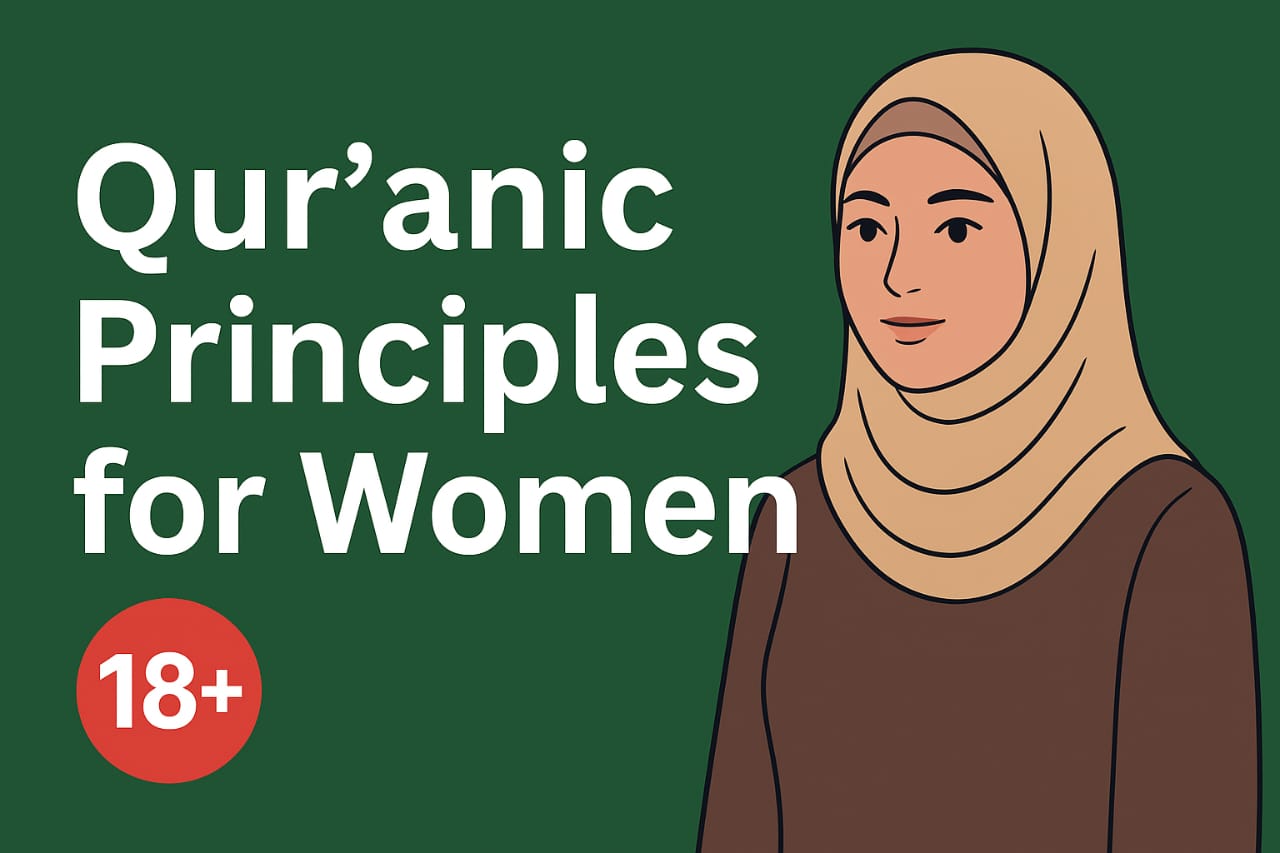
Quranic Principles and Women
The Quran is the holy book of Islam. It gives guidance for all human beings—men and women—so they can live with justice, respect, and peace. When we talk about women in the Quran, there are some very important principles to understand.
1. Equality in Humanity
- The Quran teaches that men and women are created from the same soul.
- Both are human beings with the same value in front of God.
- Their worth is not based on gender, but on their faith, character, and good deeds. Example: The Quran says, “Indeed, the most honored of you in the sight of Allah is the most righteous of you.” (49:13)
2. Spiritual Equality
- Women and men both have the same duties of prayer, fasting, charity, and belief.
- Both can reach the highest levels of closeness to God.
- The Quran gives examples of great women of faith, like Maryam (Mary), mother of Isa (Jesus), who is honored as a role model for both men and women.
3. Right to Education
- The Quran encourages all people to seek knowledge.
- The first revealed verse was about reading and learning.
- This means that education is a right for women as well as men.
4. Respect and Dignity
- The Quran asks men to treat women with kindness and respect.
- Marriage in Islam is described as a relationship of love, mercy, and peace between husband and wife.
- Women are not seen as property, but as partners in life.
5. Right to Own Property and Wealth
- A woman in Islam can earn, inherit, and spend her own money.
- She does not have to give her income to her husband.
- This was a revolutionary right for women at the time of revelation.
6. Inheritance and Financial Rights
- The Quran gives women a share in inheritance, which was not common in ancient societies.
- In some cases, a woman’s share may be different from a man’s, but at the same time, men are made responsible for the financial care of the family.
7. Protection from Oppression
- The Quran condemns injustice against women.
- It stopped harmful practices like burying baby girls alive, which was common in pre-Islamic Arabia.
- It also set rules for fair treatment in marriage, divorce, and social life.
8. Modesty and Protection
- Both men and women are told to dress and behave modestly.
- This is to protect dignity and promote respect between people.
- The Quran gives guidelines for women’s dress, but also tells men to lower their gaze and control their behavior.
9. Examples of Strong Women in the Quran
- Maryam (Mary): Praised for her purity and faith.
- Asiya (Pharaoh’s wife): Known for her courage and belief in God despite living under a tyrant.
- The Queen of Sheba (Bilqis): Shown as a wise and just leader.
These stories highlight that women can be leaders, believers, and examples of strength and wisdom.
Conclusion
The Quranic principles about women are based on justice, respect, dignity, and equality in spirituality. Women are given rights to education, property, respect in marriage, inheritance, and freedom from oppression. They are seen as partners in life and as individuals who can reach the highest level of closeness to God through their faith and good deeds.
In simple words:
👉 The Quran honors women, protects their rights, and sees them as equal human beings with men in the sight of God.
Quranic Principles for the First Menstrual Cycle of Women
The menstrual cycle (monthly period) is a natural part of a woman’s life. The Quran speaks about it with respect and gives simple rules for this time. Let’s understand it step by step.
1. Menstruation is Natural, Not Shameful
Allah clearly says that menstruation is something created by Him. It is not a sin or a bad thing, but it can bring pain and difficulty.
Quran Verse:
Arabic:
وَيَسْـَٔلُونَكَ عَنِ ٱلْمَحِيضِ ۖ قُلْ هُوَ أَذًى
English:
“They ask you about menstruation. Say, it is a discomfort.” (Surah Al-Baqarah 2:222)
Urdu:
“وہ آپ سے حیض کے بارے میں پوچھتے ہیں، کہہ دیجیے: یہ تکلیف ہے۔” (البقرہ 2:222)
👉 This shows menstruation is natural, not shameful.
2. Rest and Care
The Quran reminds men to respect women during this time and avoid intimacy. This is a way of protecting women and giving them rest.
Quran Verse:
Arabic:
فَٱعْتَزِلُوا۟ ٱلنِّسَآءَ فِى ٱلْمَحِيضِ وَلَا تَقْرَبُوهُنَّ حَتَّىٰ يَطْهُرْنَ
English:
“So keep away from women during menstruation, and do not approach them until they are pure.” (Al-Baqarah 2:222)
Urdu:
“پس عورتوں سے حیض کی حالت میں الگ رہو، اور ان کے قریب نہ جاؤ یہاں تک کہ وہ پاک ہو جائیں۔” (البقرہ 2:222)
👉 This means no sexual relations, but normal care, love, and respect must continue.
3. Religious Rules (Prayer and Fasting)
- Women do not pray (Salah) during menstruation.
- Women do not fast during Ramadan while on their period, but they can fast later.
- This is a mercy from Allah, not a punishment.
Quran Verse:
(While the Quran doesn’t directly say “do not pray or fast,” this rule comes from the Prophet ﷺ who explained Quranic guidance. The Quran teaches ease, not hardship.)
Arabic:
يُرِيدُ ٱللَّهُ بِكُمُ ٱلْيُسْرَ وَلَا يُرِيدُ بِكُمُ ٱلْعُسْرَ
English:
“Allah wants ease for you and does not want hardship for you.” (Al-Baqarah 2:185)
Urdu:
“اللہ تمہارے لیے آسانی چاہتا ہے اور تمہارے لیے تنگی نہیں چاہتا۔” (البقرہ 2:185)
👉 That’s why women are given rest in worship during this time.
4. Purification After the Cycle
When the period ends, women should perform a ghusl bath before praying or fasting again. This is for physical and spiritual cleanliness.
Quran Verse:
Arabic:
فَإِذَا تَطَهَّرْنَ فَأْتُوهُنَّ مِنْ حَيْثُ أَمَرَكُمُ ٱللَّهُ
English:
“And when they have purified themselves, then go to them as Allah has commanded you.” (Al-Baqarah 2:222)
Urdu:
“اور جب وہ پاک ہو جائیں تو ان کے پاس آؤ جہاں سے اللہ نے تمہیں حکم دیا ہے۔” (البقرہ 2:222)
👉 This shows the importance of purification before returning to normal worship and marital life.
5. Respect and Dignity
The Quran never calls menstruating women “unclean” or “less valuable.” Instead, it reminds everyone to respect their condition and treat them kindly.
Quran Verse:
Arabic:
وَعَاشِرُوهُنَّ بِٱلْمَعْرُوفِ
English:
“And live with them in kindness.” (An-Nisa 4:19)
Urdu:
“اور ان کے ساتھ بھلے طریقے سے زندگی بسر کرو۔” (النساء 4:19)
👉 Women must be treated with love and dignity, even during menstruation.
Conclusion
The Quran gives clear and balanced guidance about menstruation:
- It is natural and not a shame.
- Women deserve rest and care.
- They are exempt from prayer and fasting as a mercy.
- Sexual relations are not allowed, but respect and love remain.
- After the cycle, women should perform ghusl bath and return to worship.
- Always treat women with dignity and kindness.
👉 In very simple words: The Quran teaches that menstruation is a natural process, and women should be respected, cared for, and given ease during this time.
Woman’s Character as a Mother and Quranic Principles
The Quran gives a very high place to mothers. In Islam, a woman is honored most when she becomes a mother. Her role is full of love, sacrifice, and patience. The Quran reminds us again and again to respect and care for our mothers.
1. Mother as the First Teacher
- A mother is the first school of a child.
- She teaches her child how to speak, behave, and understand life.
- The Quran shows that the efforts of a mother are priceless and must be remembered with gratitude.
2. Hardship of Motherhood
The Quran describes how much pain and sacrifice a mother goes through during pregnancy, birth, and raising a child.
Quran Verse:
Arabic:
وَوَصَّيْنَا ٱلْإِنسَـٰنَ بِوَٰلِدَيْهِ ۖ حَمَلَتْهُ أُمُّهُ وَهْنًا عَلَىٰ وَهْنٍ وَفِصَـٰلُهُ فِى عَامَيْنِ
English:
“We have commanded people to honor their parents. Their mother carried them, suffering weakness upon weakness, and their weaning takes two years.” (Luqman 31:14)
Urdu:
“اور ہم نے انسان کو اس کے والدین کے بارے میں نصیحت کی، اس کی ماں نے اسے کمزوری پر کمزوری جھیل کر اٹھائے رکھا اور اس کا دودھ چھڑانا دو برس میں ہے۔” (لقمان 31:14)
👉 This shows the great struggle and sacrifice of a mother.
3. Respect and Obedience to Mother
- After Allah, the mother has the greatest right over a child.
- Even if parents are old and weak, the Quran says never to speak harshly to them.
Quran Verse:
Arabic:
فَلَا تَقُل لَّهُمَآ أُفٍّۢ وَلَا تَنْهَرْهُمَا وَقُل لَّهُمَا قَوْلًۭا كَرِيمًۭا
English:
“Do not even say ‘uff’ (a word of disrespect) to them, nor scold them, but speak to them with kind words.” (Al-Isra 17:23)
Urdu:
“ان سے اُف تک نہ کہو اور نہ انہیں جھڑکو، اور ان سے ادب کی بات کرو۔” (الاسراء 17:23)
👉 This shows how much respect the Quran gives to mothers.
4. The Status of Mothers in Islam
- In a famous hadith (saying of the Prophet ﷺ), when a man asked who deserves the best treatment, the Prophet replied:
- Your mother
- Your mother
- Your mother
- Then your father
👉 This shows that a mother’s rights are greater than anyone else’s after Allah.
5. Mother’s Role in Building Society
- A good mother builds a good family.
- A good family builds a good society.
- The Quran shows that raising children with faith, manners, and kindness is one of the greatest responsibilities of mothers.
6. Dua (Prayer) for Parents
The Quran even teaches us a special prayer for our parents, especially mothers:
Quran Verse:
Arabic:
رَّبِّ ٱرْحَمْهُمَا كَمَا رَبَّيَانِى صَغِيرًۭا
English:
“My Lord, have mercy on them as they raised me when I was small.” (Al-Isra 17:24)
Urdu:
“اے میرے رب! ان پر رحم فرما جیسا کہ انہوں نے بچپن میں میری پرورش کی۔” (الاسراء 17:24)
👉 This shows gratitude and love for the endless sacrifices of mothers.
Conclusion
The Quran gives a mother the highest respect and honor:
- She suffers and sacrifices during pregnancy, birth, and upbringing.
- She deserves love, respect, and obedience more than anyone else.
- Speaking kindly and making dua for her is a Quranic command.
- A mother’s role is not only in the family but in shaping the future of the whole society.
👉 In very simple words: The Quran teaches that a mother is a source of love, sacrifice, and guidance. She must be honored, respected, and cared for throughout her life.
Woman’s Character as a Sister and Quranic Principles
In Islam, the sister holds a special place in the family. She is a source of love, care, and connection between brothers and parents. The Quran and the teachings of Prophet Muhammad ﷺ give guidance on how sisters should be respected, protected, and treated with kindness.
1. Sister as a Gift from Allah
- Just like sons, daughters and sisters are gifts from Allah.
- The Quran says that both boys and girls are blessings, not a burden.
Quran Verse:
Arabic:
لِّلَّهِ مُلْكُ ٱلسَّمَـٰوَٰتِ وَٱلْأَرْضِ ۖ يَخْلُقُ مَا يَشَآءُ ۚ يَهَبُ لِمَن يَشَآءُ إِنَـٰثًۭا وَيَهَبُ لِمَن يَشَآءُ ٱلذُّكُورَ
English:
“To Allah belongs the kingdom of the heavens and the earth. He creates what He wills. He gives to whom He wills daughters, and He gives to whom He wills sons.” (Ash-Shura 42:49)
Urdu:
“آسمانوں اور زمین کی بادشاہی اللہ ہی کے لیے ہے۔ وہ جو چاہتا ہے پیدا کرتا ہے، جسے چاہتا ہے بیٹیاں عطا کرتا ہے اور جسے چاہتا ہے بیٹے دیتا ہے۔” (الشورى 42:49)
👉 This shows that sisters are a mercy and blessing from Allah, not a cause of shame.
2. Quranic Command of Family Ties (Silah Rahmi)
- The Quran commands us to keep good relations with family, including sisters.
- Breaking ties is a sin, and showing love to siblings is an act of worship.
Quran Verse:
Arabic:
وَٱتَّقُوا۟ ٱللَّهَ ٱلَّذِى تَسَآءَلُونَ بِهِۦ وَٱلْأَرْحَامَ
English:
“And be mindful of Allah, through Whom you ask one another, and honor family ties.” (An-Nisa 4:1)
Urdu:
“اور اللہ سے ڈرو، جس کے واسطے سے تم ایک دوسرے سے مانگتے ہو، اور رشتہ داروں کا حق ادا کرو۔” (النساء 4:1)
👉 Sisters are part of these family ties that must be respected and protected.
3. Protection and Care of Sisters
- In Islam, brothers have a duty to protect and care for their sisters with respect and kindness.
- Sisters are not a burden but a trust from Allah.
Prophet Muhammad ﷺ said:
“Whoever has three daughters or sisters, and he treats them kindly, fears Allah regarding them, and supports them, then Paradise will be for him.” (Tirmidhi)
Easy Meaning: Taking care of sisters and showing them love is a way to Jannah (Paradise).
4. Equality and Justice Between Brothers and Sisters
- The Quran gives both sons and daughters rights in inheritance.
- This shows that sisters also have financial rights and must not be deprived.
Quran Verse:
Arabic:
لِّلرِّجَالِ نَصِيبٌۭ مِّمَّا تَرَكَ ٱلْوَٰلِدَانِ وَٱلْأَقْرَبُونَ وَلِلنِّسَآءِ نَصِيبٌۭ مِّمَّا تَرَكَ ٱلْوَٰلِدَانِ وَٱلْأَقْرَبُونَ
English:
“For men is a share of what the parents and relatives leave, and for women is a share of what the parents and relatives leave.” (An-Nisa 4:7)
Urdu:
“مردوں کے لیے بھی اس میں حصہ ہے جو والدین اور رشتہ دار چھوڑ جائیں، اور عورتوں کے لیے بھی حصہ ہے جو والدین اور رشتہ دار چھوڑ جائیں۔” (النساء 4:7)
👉 This verse shows that sisters must get their rightful share, and Islam gives them financial independence.
5. Prophet Muhammad’s ﷺ Love for Family (Including Sisters)
- The Prophet ﷺ always taught kindness to family members.
- He said:
“The one who maintains family ties will be connected to Allah’s mercy, and the one who breaks them will be cut off from His mercy.” (Bukhari & Muslim)
👉 This includes love, respect, and connection with sisters.
6. Sisters as a Source of Love and Unity
- A sister often plays the role of a bridge between family members.
- She spreads affection, care, and connection among brothers and parents.
- The Quran encourages believers to support one another in goodness, and this applies strongly within families.
Quran Verse:
Arabic:
وَتَعَاوَنُوا۟ عَلَى ٱلْبِرِّ وَٱلتَّقْوَىٰ
English:
“And help one another in righteousness and piety.” (Al-Ma’idah 5:2)
Urdu:
“اور نیکی اور پرہیزگاری میں ایک دوسرے کی مدد کرو۔” (المائدہ 5:2)
👉 Brothers and sisters should help each other in goodness and faith.
Conclusion
According to the Quran and the teachings of Prophet Muhammad ﷺ:
- Sisters are a gift and blessing from Allah.
- They deserve love, protection, and respect.
- Keeping ties with sisters is part of family obligations in Islam.
- Supporting and caring for sisters is a way to Paradise.
- Sisters have rights in inheritance and financial matters, which must be given fairly.
- A good relationship with sisters builds love, unity, and blessings in the family.
👉 In simple words: The Quran and Prophet Muhammad ﷺ teach us that sisters are blessings, and treating them with kindness and justice brings Allah’s mercy and reward.
Woman’s Character as a Wife and Quranic Principles
In Islam, marriage is not just a contract – it is a bond of love, mercy, respect, and trust. The Quran describes the relationship between husband and wife as one of the most beautiful blessings of Allah. A woman as a wife has an honored and respected position in the family.
1. Marriage is a Sign of Allah’s Mercy
The Quran says that Allah created spouses so that people can live in peace and love with each other.
Quran Verse:
Arabic:
وَمِنْ ءَايَـٰتِهِۦٓ أَنْ خَلَقَ لَكُم مِّنْ أَنفُسِكُمْ أَزْوَٰجًۭا لِّتَسْكُنُوٓا۟ إِلَيْهَا وَجَعَلَ بَيْنَكُم مَّوَدَّةًۭ وَرَحْمَةً ۚ
English:
“And among His signs is that He created for you spouses from yourselves so that you may find peace in them, and He placed between you affection and mercy.” (Ar-Rum 30:21)
Urdu:
“اور اس کی نشانیوں میں سے یہ ہے کہ اس نے تمہارے لیے تمہاری ہی جنس سے بیویاں بنائیں تاکہ تم ان کے پاس سکون پاؤ، اور اس نے تمہارے درمیان محبت اور رحمت رکھی۔” (الروم 30:21)
👉 This shows that a wife is not just a partner, but a source of peace, love, and mercy.
2. Equality in Humanity and Faith
- The Quran teaches that men and women are equal in their humanity and their relationship with Allah.
- A wife is not a servant; she is a partner in life.
Quran Verse:
Arabic:
وَلَهُنَّ مِثْلُ ٱلَّذِى عَلَيْهِنَّ بِٱلْمَعْرُوفِ
English:
“And women have rights similar to those over them, according to what is fair.” (Al-Baqarah 2:228)
Urdu:
“اور عورتوں کے لیے بھی ویسے ہی حقوق ہیں جیسے ان پر مردوں کے حق ہیں دستور کے مطابق۔” (البقرہ 2:228)
👉 This means that wives have rights just like husbands do, and fairness must be maintained.
3. Respect and Kind Treatment
The Quran commands husbands to treat their wives with kindness and respect.
Quran Verse:
Arabic:
وَعَاشِرُوهُنَّ بِٱلْمَعْرُوفِ
English:
“And live with them in kindness.” (An-Nisa 4:19)
Urdu:
“اور ان کے ساتھ بھلے طریقے سے زندگی بسر کرو۔” (النساء 4:19)
👉 A wife must be honored, loved, and respected, not oppressed.
4. Support and Protection
- In Islam, a husband is responsible for providing food, clothing, shelter, and protection for his wife.
- The wife’s role is to support, care, and share love in the family.
- This balance brings harmony in the household.
Quran Verse:
Arabic:
ٱلرِّجَالُ قَوَّٰمُونَ عَلَى ٱلنِّسَآءِ
English:
“Men are protectors and maintainers of women.” (An-Nisa 4:34)
Urdu:
“مرد عورتوں کے محافظ اور نگران ہیں۔” (النساء 4:34)
👉 This means men must take responsibility for their wives, not misuse authority.
5. Mutual Love and Cooperation
- Marriage is not one-sided; it is a partnership.
- The Quran encourages both husband and wife to help each other in faith, family, and life.
Quran Verse:
Arabic:
هُنَّ لِبَاسٌۭ لَّكُمْ وَأَنتُمْ لِبَاسٌۭ لَّهُنَّ
English:
“They are clothing for you, and you are clothing for them.” (Al-Baqarah 2:187)
Urdu:
“وہ تمہارے لیے لباس ہیں اور تم ان کے لیے لباس ہو۔” (البقرہ 2:187)
👉 Just like clothes protect, cover, and beautify, a husband and wife should protect and comfort each other.
6. Prophet Muhammad’s ﷺ Teachings About Wives
The Prophet Muhammad ﷺ always treated his wives with love, kindness, and respect. He helped them in housework, played with them, and never hurt them.
Prophet ﷺ said:
“The best of you is the one who is best to his wife, and I am the best among you to my wives.” (Tirmidhi)
👉 This shows that true greatness in a man is shown in how he treats his wife.
7. Wife’s Role in the Family
- A wife is the heart of the home.
- She raises children, supports her husband, and builds an environment of peace.
- The Quran values her efforts and gives her respect as a partner in life and faith.
Conclusion
According to the Quran and the teachings of Prophet Muhammad ﷺ:
- A wife is a source of peace, love, and mercy.
- She has equal rights and must be treated with kindness and fairness.
- The husband is responsible for her protection and care, while she supports and builds the family.
- Husbands and wives are like garments for each other – giving comfort, beauty, and protection.
- The Prophet ﷺ taught that the best man is the one who treats his wife the best.
👉 In very simple words: The Quran shows that a woman as a wife is an honored partner in marriage, deserving love, respect, protection, and kindness.
Woman’s Character as a Professional Woman and Quranic Principles
Islam does not stop women from working or being professional. In fact, the Quran and the teachings of Prophet Muhammad ﷺ show that women can take part in education, business, health, teaching, and many other fields. But Islam also gives some principles so that women can work with dignity, safety, and respect.
1. Right to Work and Earn
- The Quran gives women the right to work and earn money.
- A woman’s income is her own property, and no one can take it without her permission.
Quran Verse:
Arabic:
لِّلرِّجَالِ نَصِيبٌۭ مِّمَّا ٱكْتَسَبُوا۟ ۖ وَلِلنِّسَآءِ نَصِيبٌۭ مِّمَّا ٱكْتَسَبْنَ ۚ
English:
“For men is a share of what they earn, and for women is a share of what they earn.” (An-Nisa 4:32)
Urdu:
“مردوں کے لیے اس میں حصہ ہے جو وہ کمائیں، اور عورتوں کے لیے بھی اس میں حصہ ہے جو وہ کمائیں۔” (النساء 4:32)
👉 This shows that women can work and earn like men, and their earnings belong to them.
2. Examples of Professional Women in Islam
- Khadijah (RA), the wife of Prophet Muhammad ﷺ, was a respected businesswoman.
- Shifa bint Abdullah (RA) was appointed by the Prophet ﷺ to manage the marketplace of Madinah.
- Women also worked as nurses, teachers, and helpers in society.
👉 These examples show that women in Islam can be successful professionals.
3. Education First
- To become a professional, education is necessary.
- The Quran encourages both men and women to seek knowledge.
Quran Verse:
Arabic:
قُلْ هَلْ يَسْتَوِى ٱلَّذِينَ يَعْلَمُونَ وَٱلَّذِينَ لَا يَعْلَمُونَ
English:
“Say, are those who know equal to those who do not know?” (Az-Zumar 39:9)
Urdu:
“کہہ دیجیے: کیا جاننے والے اور نہ جاننے والے برابر ہیں؟” (الزمر 39:9)
👉 This shows that learning and knowledge are the foundation of a woman’s success.
4. Principles for Working Women in the Quran
When women work, the Quran gives some principles:
a) Modesty in Dress and Behavior
Women are told to work with dignity, without being exploited.
Quran Verse:
Arabic:
وَقُل لِّلْمُؤْمِنَـٰتِ يَغْضُضْنَ مِنْ أَبْصَـٰرِهِنَّ وَيَحْفَظْنَ فُرُوجَهُنَّ وَلَا يُبْدِينَ زِينَتَهُنَّ إِلَّا مَا ظَهَرَ مِنْهَا
English:
“And tell the believing women to lower their gaze, guard their chastity, and not display their beauty except what is necessary.” (An-Nur 24:31)
Urdu:
“اور ایمان والی عورتوں سے کہہ دیجیے: اپنی نگاہیں نیچی رکھیں اور اپنی شرمگاہوں کی حفاظت کریں اور اپنی زینت ظاہر نہ کریں سوائے جو ظاہر ہے۔” (النور 24:31)
👉 This means professionalism with modesty and respect.
b) Work with Honesty and Justice
The Quran commands fairness in all dealings, whether by men or women.
Quran Verse:
Arabic:
وَأَقِيمُوا ٱلْوَزْنَ بِٱلْقِسْطِ وَلَا تُخْسِرُوا ٱلْمِيزَانَ
English:
“And establish weight in justice, and do not reduce the balance.” (Ar-Rahman 55:9)
Urdu:
“اور انصاف کے ساتھ تول قائم کرو اور پیمانے میں کمی نہ کرو۔” (الرحمٰن 55:9)
👉 A professional woman must work honestly, without cheating or injustice.
5. Balance Between Career and Family
- Islam values both career and family.
- A woman can work, but she should also care for her family because family is the foundation of society.
- The Quran praises women who balance responsibilities with wisdom.
6. Prophet Muhammad’s ﷺ Teachings About Working Women
- The Prophet ﷺ praised women who contributed to society.
- He never stopped women from learning, working, or helping.
- He only reminded them to work with dignity, modesty, and faith.
Prophet ﷺ said:
“Seeking knowledge is a duty upon every Muslim, male and female.” (Ibn Majah)
👉 Education and contribution to society are encouraged for both men and women.
Conclusion
According to the Quran and the teachings of Prophet Muhammad ﷺ:
- Women have the right to work and earn with dignity.
- Their income is their own property.
- Education is the key to professionalism.
- Women must follow principles of modesty, honesty, and justice.
- Balance between career and family is very important.
- Islam gives examples of strong professional women, like Khadijah (RA) and Shifa (RA).
👉 In very simple words: The Quran shows that a professional woman is respected, independent, and valuable to society, as long as she works with faith, modesty, and honesty.
Woman’s Character as a Warrior and Quranic Principles
Islam honors women not only as mothers, sisters, wives, or professionals, but also as courageous defenders of truth. History shows that women played important roles in times of struggle. The Quran gives principles of courage, sacrifice, and standing for justice, which apply to both men and women.
1. Courage is for Both Men and Women
- The Quran does not limit bravery to men only.
- Believers, whether male or female, are praised for standing firm in faith and justice.
Quran Verse:
Arabic:
وَٱلْمُؤْمِنُونَ وَٱلْمُؤْمِنَـٰتُ بَعْضُهُمْ أَوْلِيَآءُ بَعْضٍۢ ۚ يَأْمُرُونَ بِٱلْمَعْرُوفِ وَيَنْهَوْنَ عَنِ ٱلْمُنكَرِ
English:
“The believing men and believing women are protectors of one another. They command what is right and forbid what is wrong.” (At-Tawbah 9:71)
Urdu:
“مومن مرد اور مومن عورتیں آپس میں ایک دوسرے کے مددگار ہیں۔ وہ بھلائی کا حکم دیتے ہیں اور برائی سے روکتے ہیں۔” (التوبہ 9:71)
👉 This means women also have the duty to be brave, strong, and protective of truth.
2. Women Defended Faith in Early Islam
In the time of Prophet Muhammad ﷺ, women actively supported Islam during wars and struggles:
- Nusaybah bint Ka’ab (RA): Known as the “Warrior of Uhud”, she fought with her sword to defend the Prophet ﷺ during the Battle of Uhud.
- Khawla bint al-Azwar (RA): A fearless warrior, she fought against the Roman army with extraordinary courage.
- Umm Ammarah (RA): She shielded the Prophet ﷺ when he was attacked in battle.
👉 These women show that courage, bravery, and sacrifice are also part of a woman’s character in Islam.
3. Quranic Principle: Standing for Justice
The Quran teaches that believers must stand firm for justice, even if it is difficult.
Quran Verse:
Arabic:
يَـٰٓأَيُّهَا ٱلَّذِينَ ءَامَنُوا۟ كُونُوا۟ قَوَّٰمِينَ بِٱلْقِسْطِ شُهَدَآءَ لِلَّهِ
English:
“O you who believe! Stand firm for justice as witnesses to Allah.” (An-Nisa 4:135)
Urdu:
“اے ایمان والو! انصاف پر مضبوطی سے قائم رہو اور اللہ کے واسطے گواہی دینے والے بنو۔” (النساء 4:135)
👉 Women as warriors show this principle by standing against injustice and defending the truth.
4. Support in War Efforts
Even when women did not directly fight, they supported the Muslim community by:
- Nursing the wounded.
- Supplying water and food.
- Encouraging the soldiers with faith and courage.
Example: At the Battle of Uhud, women like Rufaidah al-Aslamiyyah (RA) worked as nurses to care for the injured.
5. Prophet Muhammad’s ﷺ Respect for Brave Women
- The Prophet ﷺ praised the courage of women like Nusaybah bint Ka’ab (RA).
- He acknowledged their bravery and sacrifice in protecting Islam.
👉 This shows that Islam does not limit women to the home only – their courage in times of need is honored.
6. Principles for Women Warriors in Islam
From the Quran and Sunnah, we learn some rules:
- Women may defend their faith, family, and community when needed.
- They must act with dignity, not out of pride or aggression.
- Their bravery is an act of worship if done for Allah’s cause.
Quran Verse:
Arabic:
وَقَـٰتِلُوا۟ فِى سَبِيلِ ٱللَّهِ ٱلَّذِينَ يُقَـٰتِلُونَكُمْ وَلَا تَعْتَدُوٓا۟ ۚ إِنَّ ٱللَّهَ لَا يُحِبُّ ٱلْمُعْتَدِينَ
English:
“Fight in the cause of Allah those who fight you, but do not transgress limits. Indeed, Allah does not love transgressors.” (Al-Baqarah 2:190)
Urdu:
“اور اللہ کی راہ میں ان سے لڑو جو تم سے لڑتے ہیں، اور حد سے نہ بڑھو۔ بے شک اللہ حد سے بڑھنے والوں کو پسند نہیں کرتا۔” (البقرہ 2:190)
👉 This principle shows that even in war, women and men must act with justice, not cruelty.
Conclusion
According to the Quran and the teachings of Prophet Muhammad ﷺ:
- Women can be courageous defenders of faith.
- They are protectors of truth and justice alongside men.
- History remembers brave women like Nusaybah bint Ka’ab (RA) and Khawla bint al-Azwar (RA).
- Women can fight, protect, and support the community in times of struggle.
- Their courage, sacrifice, and service are highly respected in Islam.
👉 In very simple words: The Quran and Islam teach that a woman can also be a warrior – strong, brave, and protective of truth, while always acting with justice and dignity.
Woman’s Character as a Doctor and Quranic Principles
Health is one of the biggest blessings of Allah. Islam encourages taking care of the body and helping others in times of sickness. The Quran and teachings of Prophet Muhammad ﷺ show that women can serve society as doctors, nurses, and healers. Being a doctor is not only a job but also a way to serve humanity.
1. Caring for the Sick is a Noble Deed
The Quran teaches us to help one another in good things. Treating the sick and saving lives is one of the greatest acts of goodness.
Quran Verse:
Arabic:
وَتَعَاوَنُوا۟ عَلَى ٱلْبِرِّ وَٱلتَّقْوَىٰ
English:
“And help one another in righteousness and piety.” (Al-Ma’idah 5:2)
Urdu:
“اور نیکی اور پرہیزگاری کے کاموں میں ایک دوسرے کی مدد کرو۔” (المائدہ 5:2)
👉 This means when a woman becomes a doctor, she is doing an act of ibadah (worship) by helping people.
2. Examples of Women Doctors in Early Islam
- Rufaidah al-Aslamiyyah (RA): She is known as the first nurse and doctor in Islam. She cared for the wounded in the battles of Islam.
- Umm Sinan al-Aslamiyyah (RA): She worked with other women to treat the injured.
- These women were respected by the Prophet ﷺ and the companions for their medical service.
👉 This shows that Islam always allowed women to serve as doctors and nurses.
3. Knowledge is for Men and Women
To be a doctor, knowledge is necessary. The Quran values knowledge for everyone, male or female.
Quran Verse:
Arabic:
هَلْ يَسْتَوِى ٱلَّذِينَ يَعْلَمُونَ وَٱلَّذِينَ لَا يَعْلَمُونَ
English:
“Are those who know equal to those who do not know?” (Az-Zumar 39:9)
Urdu:
“کیا جاننے والے اور نہ جاننے والے برابر ہیں؟” (الزمر 39:9)
👉 This shows that women can study medicine and become skilled doctors.
4. Saving Lives is Like Saving All Humanity
The Quran gives a very powerful message about saving lives.
Quran Verse:
Arabic:
وَمَنْ أَحْيَاهَا فَكَأَنَّمَآ أَحْيَا ٱلنَّاسَ جَمِيعًۭا
English:
“Whoever saves one life, it is as if he saved all of humanity.” (Al-Ma’idah 5:32)
Urdu:
“جس نے ایک جان کو بچایا، گویا اس نے تمام انسانوں کو بچا لیا۔” (المائدہ 5:32)
👉 A woman doctor, by saving patients, earns the reward of saving all humanity.
5. Prophet Muhammad’s ﷺ Encouragement
- The Prophet ﷺ allowed and encouraged women to help the wounded in battles.
- He praised their service and did not stop them from treating even men when necessary, as long as modesty was respected.
👉 This shows Islam gave women the responsibility to work in healthcare.
6. Quranic Principles for Women Doctors
A woman doctor must follow some Islamic principles:
- Work with honesty – Do her duty sincerely. Quran: “Indeed, Allah commands you to render trusts to whom they are due…” (An-Nisa 4:58).
- Maintain modesty – Dress and behave with dignity while working. Quran (An-Nur 24:31) teaches women to lower their gaze and preserve modesty.
- Intention (Niyyah) – Work not only for money but also to please Allah by helping people.
7. Balance in Life
Islam teaches balance. A woman doctor should:
- Take care of her patients with professionalism.
- Care for her family with love.
- Protect her health, because a doctor also needs strength to heal others.
Conclusion
According to the Quran and Prophet Muhammad’s ﷺ teachings:
- Women can serve as doctors, nurses, and healers.
- Helping the sick is a form of worship and charity.
- Women in early Islam, like Rufaidah al-Aslamiyyah (RA), were pioneers in medicine.
- The Quran gives principles of knowledge, modesty, honesty, and saving lives.
👉 In simple words: A woman doctor is respected in Islam. By treating the sick, she earns reward from Allah and plays a vital role in society.
Woman’s Character as a Teacher and Quranic Principles
Teaching is one of the most respected roles in Islam. A teacher spreads knowledge, builds character, and guides people to the right path. In Islam, both men and women are encouraged to learn and to teach. The Quran and the teachings of Prophet Muhammad ﷺ show that a woman can be a teacher, and this role is full of respect and reward.
1. Teaching is an Honorable Duty
The Quran says that knowledge is a light from Allah. A teacher who spreads this light is doing a very noble job.
Quran Verse:
Arabic:
يَرْفَعِ ٱللَّهُ ٱلَّذِينَ ءَامَنُوا۟ مِنكُمْ وَٱلَّذِينَ أُوتُوا۟ ٱلْعِلْمَ دَرَجَـٰتٍۢ
English:
“Allah will raise those who believe among you and those who have been given knowledge by degrees.” (Al-Mujadilah 58:11)
Urdu:
“اللہ ایمان والوں کو اور جنہیں علم دیا گیا ہے ان کو درجوں میں بلند کرے گا۔” (المجادلہ 58:11)
👉 This shows that women who teach and spread knowledge gain high respect in the sight of Allah.
2. Education is for Men and Women
The Quran never limits education to men only. Women also have the right to learn and then teach others.
Quran Verse:
Arabic:
قُلْ هَلْ يَسْتَوِى ٱلَّذِينَ يَعْلَمُونَ وَٱلَّذِينَ لَا يَعْلَمُونَ
English:
“Say, are those who know equal to those who do not know?” (Az-Zumar 39:9)
Urdu:
“کہہ دیجیے: کیا جاننے والے اور نہ جاننے والے برابر ہیں؟” (الزمر 39:9)
👉 This means education makes a person special, whether man or woman.
3. Examples of Women Teachers in Islam
- Aisha (RA), the wife of Prophet Muhammad ﷺ, was one of the greatest teachers in Islam. She taught thousands of companions and students after the Prophet ﷺ passed away.
- Women companions of the Prophet ﷺ also taught Qur’an, Hadith, and Islamic rulings to the next generations.
👉 This shows that women were respected as teachers in Islamic history.
4. Prophet Muhammad ﷺ Encouraged Teaching
The Prophet ﷺ said:
“The best among you are those who learn the Quran and teach it.” (Bukhari)
👉 This teaching is for both men and women. A woman who teaches Qur’an, knowledge, or skills is among the best people.
5. Quranic Principles for Women as Teachers
a) Teach with Honesty and Sincerity
Teaching should be for Allah’s pleasure, not for pride.
Quran: “And do not mix truth with falsehood…” (Al-Baqarah 2:42).
b) Teach with Modesty and Respect
A teacher must have good character, speak kindly, and act with dignity.
Quran (An-Nur 24:30–31) teaches both men and women to lower their gaze and maintain modesty.
c) Spread Beneficial Knowledge
The Prophet ﷺ taught that beneficial knowledge continues to give reward even after death (Hadith – Muslim).
6. A Teacher Builds Generations
A woman teacher does not only teach lessons; she shapes future generations. She passes values, faith, and knowledge to children and adults. This role is like building the foundation of society.
Conclusion
According to the Quran and teachings of Prophet Muhammad ﷺ:
- A woman can be a teacher and guide for society.
- Education is the right of both men and women.
- Women like Aisha (RA) were among the greatest teachers in Islamic history.
- The Quran gives principles of honesty, modesty, and spreading beneficial knowledge.
- A teacher earns continuous reward (sadaqah jariyah) because her knowledge benefits people even after she is gone.
👉 In very simple words: A woman as a teacher is honored in Islam. She spreads knowledge, builds character, and earns great reward from Allah.
Woman’s Character as a Politician and Quranic Principles
Politics means leadership, decision-making, and serving the people. In Islam, leadership is a big responsibility, not just a position of power. Women also have the ability to lead, advise, and take part in community and political matters. The Quran and the teachings of Prophet Muhammad ﷺ show that women can play an important role in politics, as long as they follow Islamic principles.
1. Leadership is a Trust (Amanah)
The Quran describes leadership as a responsibility that must be carried out with justice.
Quran Verse:
Arabic:
إِنَّ ٱللَّهَ يَأْمُرُكُمْ أَن تُؤدُّوا۟ ٱلْأَمَـٰنَـٰتِ إِلَىٰٓ أَهْلِهَا وَإِذَا حَكَمْتُم بَيْنَ ٱلنَّاسِ أَن تَحْكُمُوا۟ بِٱلْعَدْلِ
English:
“Indeed, Allah commands you to render trusts to whom they are due, and when you judge between people, judge with justice.” (An-Nisa 4:58)
Urdu:
“بے شک اللہ تمہیں حکم دیتا ہے کہ امانتیں ان کے حقداروں کو پہنچاؤ اور جب لوگوں کے درمیان فیصلہ کرو تو عدل کے ساتھ کرو۔” (النساء 4:58)
👉 This means if a woman becomes a leader or politician, she must be just and honest.
2. Example of Queen of Sheba (Bilqis) in the Quran
The Quran mentions the story of a woman ruler — the Queen of Sheba (Bilqis). She was wise, consultative, and respectful of truth.
Quran Verse:
Arabic:
قَالَتْ يَـٰٓأَيُّهَا ٱلْمَلَؤُا۟ أَفْتُونِى فِىٓ أَمْرِى مَا كُنتُ قَاطِعَةً أَمْرًۭا حَتَّىٰ تَشْهَدُونِ
English:
“She said, ‘O chiefs, advise me in my affair. I never decide a matter until you are present with me.’” (An-Naml 27:32)
Urdu:
“اس نے کہا: اے سردارو! میرے معاملے میں مجھے رائے دو، میں کسی معاملے کا فیصلہ نہیں کرتی جب تک تم میرے ساتھ موجود نہ ہو۔” (النمل 27:32)
👉 This shows that a woman ruler can govern wisely with consultation and justice.
3. Women’s Participation in Politics in Early Islam
- Women gave Bay’ah (pledge of loyalty) to Prophet Muhammad ﷺ, showing their involvement in political matters.
- Women companions often gave advice in community issues.
- Umar ibn al-Khattab (RA) once accepted the opinion of a woman in the mosque regarding dowry, proving women’s voices were respected.
👉 This proves women had an active role in politics and decision-making in Islam.
4. Principles for Women in Politics (From the Quran and Sunnah)
a) Justice and Fairness
A politician must be fair to everyone.
Quran: “Do not let the hatred of a people prevent you from being just. Be just; that is nearer to righteousness.” (Al-Ma’idah 5:8).
b) Consultation (Shura)
Leaders must consult others before decisions.
Quran: “…and those who have responded to their master and established prayer and whose affair is [determined] by consultation among themselves…” (Ash-Shura 42:38).
c) Honesty and Trust
Politics is an amanah (trust).
Prophet ﷺ said: “When a leader betrays his people, Allah will forbid Paradise for him.” (Bukhari).
d) Service, Not Power
A true politician is a servant of the people, not a ruler of pride.
5. Qualities of a Good Woman Politician in Islam
- Knowledgeable – understands laws, justice, and people’s needs.
- Modest and Respectful – works with dignity and avoids corruption.
- Caring – focuses on serving the weak, poor, and needy.
- Brave – stands firm for truth, even if it is difficult.
6. Spiritual Equality in Leadership
The Quran makes it clear that men and women are equal in spiritual responsibility.
Quran Verse:
Arabic:
وَٱلْمُؤْمِنُونَ وَٱلْمُؤْمِنَـٰتُ بَعْضُهُمْ أَوْلِيَآءُ بَعْضٍۢ
English:
“The believing men and believing women are allies of one another.” (At-Tawbah 9:71)
Urdu:
“مومن مرد اور مومن عورتیں آپس میں ایک دوسرے کے مددگار ہیں۔” (التوبہ 9:71)
👉 This means women can also share in leadership and decision-making.
Conclusion
According to the Quran and teachings of Prophet Muhammad ﷺ:
- Politics is a trust (amanah), not a privilege.
- Women have the right to participate in politics and leadership.
- The Quran praises the wisdom of Queen Bilqis, a woman leader.
- Women companions took part in political matters through advice and pledges.
- A good woman politician must follow principles of justice, consultation, honesty, and service to the people.
👉 In simple words: A woman as a politician in Islam is respected if she leads with justice, wisdom, and honesty, serving people for the sake of Allah.
Woman’s Character as a Judge and Quranic Principles
A judge is a person who gives decisions between people with justice. In Islam, justice is one of the most important values. The Quran and the teachings of Prophet Muhammad ﷺ make it clear that justice must be applied to everyone, whether the judge is a man or a woman. Islam gives women dignity, knowledge, and the ability to take part in making fair decisions.
1. Justice is for All, Not Only for Men
The Quran does not limit justice to men only. Women are also responsible for being fair and standing for truth.
Quran Verse:
Arabic:
إِنَّ ٱللَّهَ يَأْمُرُكُمْ أَن تُؤدُّوا۟ ٱلْأَمَـٰنَـٰتِ إِلَىٰٓ أَهْلِهَا وَإِذَا حَكَمْتُم بَيْنَ ٱلنَّاسِ أَن تَحْكُمُوا۟ بِٱلْعَدْلِ
English:
“Indeed, Allah commands you to render trusts to whom they are due and when you judge between people to judge with justice.” (An-Nisa 4:58)
Urdu:
“بے شک اللہ تمہیں حکم دیتا ہے کہ امانتیں ان کے حقداروں کو پہنچاؤ اور جب لوگوں کے درمیان فیصلہ کرو تو عدل کے ساتھ کرو۔” (النساء 4:58)
👉 This verse applies to anyone who judges, man or woman.
2. Women and Knowledge in Islam
To be a judge, knowledge and wisdom are necessary. Islam allows and encourages women to seek knowledge.
Quran Verse:
Arabic:
قُلْ هَلْ يَسْتَوِى ٱلَّذِينَ يَعْلَمُونَ وَٱلَّذِينَ لَا يَعْلَمُونَ
English:
“Say, are those who know equal to those who do not know?” (Az-Zumar 39:9)
Urdu:
“کہہ دیجیے: کیا جاننے والے اور نہ جاننے والے برابر ہیں؟” (الزمر 39:9)
👉 This means women can gain legal knowledge and use it for justice.
3. Historical Examples of Women as Judges and Scholars
- Shifa bint Abdullah (RA): A respected companion, she was appointed by Caliph Umar ibn al-Khattab (RA) to supervise the marketplace of Madinah and settle disputes — a form of judicial authority.
- Aisha (RA): She was a great teacher of Hadith and Islamic law. Many companions came to her for legal judgments.
👉 This proves women had authority in decision-making and legal matters.
4. Principles from the Quran for Judges (Men and Women)
a) Justice Above Personal Feelings
Quran Verse:
Arabic:
وَلَا يَجْرِمَنَّكُمْ شَنَـَٔانُ قَوْمٍ عَلَىٰٓ أَلَّا تَعْدِلُوا۟ ۚ ٱعْدِلُوا۟ هُوَ أَقْرَبُ لِلتَّقْوَىٰ
English:
“Do not let the hatred of a people make you avoid justice. Be just; that is closer to righteousness.” (Al-Ma’idah 5:8)
Urdu:
“کسی قوم کی دشمنی تمہیں اس پر آمادہ نہ کرے کہ تم انصاف نہ کرو۔ انصاف کرو، یہی تقویٰ کے زیادہ قریب ہے۔” (المائدہ 5:8)
👉 A woman judge must give decisions with fairness, not emotion or bias.
b) Judging with Truth, Not Desire
Quran Verse:
Arabic:
فَٱحْكُم بَيْنَ ٱلنَّاسِ بِٱلْحَقِّ وَلَا تَتَّبِعِ ٱلْهَوَىٰ
English:
“So judge between the people in truth and do not follow desires.” (Sad 38:26)
Urdu:
“پس لوگوں کے درمیان حق کے ساتھ فیصلہ کرو اور خواہش کی پیروی نہ کرو۔” (ص 38:26)
👉 Women judges must decide with truth, not personal liking or pressure.
c) Consultation and Wisdom
Like Queen Bilqis (the Queen of Sheba) who ruled with consultation (Quran, Surah An-Naml 27:32), a woman judge should also consult experts and act wisely.
5. Qualities of a Good Woman Judge in Islam
- Honesty – never take bribes or favors.
- Knowledge – deep understanding of law and justice.
- Patience – listen to both sides calmly.
- Fear of Allah (Taqwa) – remember that every decision will be judged by Allah.
6. Prophet Muhammad ﷺ on Justice
The Prophet ﷺ said:
“The most beloved of people to Allah on the Day of Judgment will be the just leader, and the most hated of people to Allah will be the unjust leader.” (Tirmidhi)
👉 This applies to both men and women judges.
Conclusion
According to the Quran and Prophet Muhammad’s ﷺ teachings:
- Justice is a duty for everyone, male or female.
- Women have the right to seek knowledge and judge fairly.
- Early Muslim women like Shifa bint Abdullah (RA) and Aisha (RA) played important roles in legal and judicial matters.
- A woman judge must follow the Quranic principles of justice, truth, honesty, patience, and fear of Allah.
👉 In very simple words: Islam allows women to be judges as long as they judge with fairness, wisdom, and honesty, serving justice for the sake of Allah.
Woman Rights and Quranic Principles
Islam is the first religion that gave women clear rights and dignity more than 1,400 years ago. At a time when women were mistreated in many societies, the Quran came with guidance that protected women and honored them as equal human beings.
1. Right to Life and Respect
Before Islam, many societies treated women as worthless. Some even buried baby girls alive. The Quran strongly forbade this cruel practice.
Quran Verse:
Arabic:
وَإِذَا ٱلْمَوْءُودَةُ سُئِلَتْ • بِأَىِّ ذَنبٍۭ قُتِلَتْ
English:
“And when the baby girl who was buried alive is asked, for what sin was she killed?” (At-Takwir 81:8–9)
Urdu:
“اور جب زندہ دفن کی گئی بچی سے پوچھا جائے گا • کہ وہ کس گناہ پر ماری گئی؟” (التکویر 81:8–9)
👉 Islam gave women the right to live with honor and dignity.
2. Right to Education
The Quran and Prophet Muhammad ﷺ encouraged both men and women to seek knowledge.
Quran Verse:
Arabic:
هَلْ يَسْتَوِى ٱلَّذِينَ يَعْلَمُونَ وَٱلَّذِينَ لَا يَعْلَمُونَ
English:
“Are those who know equal to those who do not know?” (Az-Zumar 39:9)
Urdu:
“کیا جاننے والے اور نہ جاننے والے برابر ہیں؟” (الزمر 39:9)
👉 Women have a full right to get education and knowledge.
3. Right to Own Property and Wealth
Islam gave women the right to earn, own, and manage their money and property. Nobody can take it without her permission.
Quran Verse:
Arabic:
لِّلرِّجَالِ نَصِيبٌۭ مِّمَّا ٱكْتَسَبُوا۟ ۖ وَلِلنِّسَآءِ نَصِيبٌۭ مِّمَّا ٱكْتَسَبْنَ ۚ
English:
“For men is a share of what they earn, and for women is a share of what they earn.” (An-Nisa 4:32)
Urdu:
“مردوں کے لیے اس میں حصہ ہے جو وہ کمائیں، اور عورتوں کے لیے بھی اس میں حصہ ہے جو وہ کمائیں۔” (النساء 4:32)
👉 Women are financially independent in Islam.
4. Right to Marriage with Consent
In Islam, marriage is not forced. A woman must give her free consent before marriage.
Quran Verse:
Arabic:
فَلَا تَعْضُلُوهُنَّ أَن يَنكِحْنَ أَزْوَٰجَهُنَّ
English:
“Do not prevent them from marrying their husbands if they agree between themselves in a lawful manner.” (Al-Baqarah 2:232)
Urdu:
“انہیں اپنے شوہروں سے نکاح کرنے سے نہ روکو جب وہ آپس میں بھلے طریقے سے راضی ہوں۔” (البقرہ 2:232)
👉 A woman has the right to choose her husband.
5. Right to Inheritance
Before Islam, women were denied inheritance. The Quran made it a legal right for women to inherit property.
Quran Verse:
Arabic:
لِّلرِّجَالِ نَصِيبٌۭ مِّمَّا تَرَكَ ٱلْوَٰلِدَانِ وَٱلْأَقْرَبُونَ وَلِلنِّسَآءِ نَصِيبٌۭ مِّمَّا تَرَكَ ٱلْوَٰلِدَانِ وَٱلْأَقْرَبُونَ
English:
“For men is a share of what the parents and close relatives leave, and for women is a share of what the parents and close relatives leave.” (An-Nisa 4:7)
Urdu:
“مردوں کے لیے حصہ ہے جو والدین اور قریبی رشتہ دار چھوڑ جائیں، اور عورتوں کے لیے بھی حصہ ہے جو والدین اور قریبی رشتہ دار چھوڑ جائیں۔” (النساء 4:7)
👉 Women have a guaranteed right to inheritance.
6. Right to Dignity and Modesty
The Quran protects women’s dignity and instructs them to be treated with respect.
Quran Verse:
Arabic:
وَلَا تَتَمَنَّوْا۟ مَا فَضَّلَ ٱللَّهُ بِهِۦ بَعْضَكُمْ عَلَىٰ بَعْضٍۢ
English:
“Do not wish for what Allah has given some of you over others. For men is a share of what they earn, and for women is a share of what they earn.” (An-Nisa 4:32)
Urdu:
“اور جو چیز اللہ نے تم میں سے بعض کو بعض پر فضیلت دی ہے اس کی تمنا نہ کرو۔ مردوں کے لیے حصہ ہے جو انہوں نے کمایا اور عورتوں کے لیے بھی حصہ ہے جو انہوں نے کمایا۔” (النساء 4:32)
👉 Islam gave women respect and stopped injustice against them.
7. Right to Divorce (Khula)
If a woman is unhappy in her marriage, she has the right to request divorce (Khula). This protects her from being trapped in a harmful relationship.
8. Spiritual Equality
In the sight of Allah, men and women are equal in faith, worship, and reward.
Quran Verse:
Arabic:
إِنِّى لَآ أُضِيعُ عَمَلَ عَامِلٍۢ مِّنكُم مِّن ذَكَرٍ أَوْ أُنثَىٰ
English:
“Indeed, I will never waste the work of any worker among you, whether male or female.” (Aal-e-Imran 3:195)
Urdu:
“میں تم میں سے کسی بھی عمل کرنے والے کا عمل ضائع نہیں کرتا، چاہے وہ مرد ہو یا عورت۔” (آل عمران 3:195)
👉 This shows men and women are spiritually equal before Allah.
Conclusion
According to the Quran and Islamic teachings, women have:
- The right to life and respect.
- The right to education and knowledge.
- The right to own property and earn money.
- The right to marriage with consent.
- The right to inheritance.
- The right to dignity and modesty.
- The right to divorce (Khula) if needed.
- The right to equal spiritual reward.
👉 In simple words: The Quran gave women honor, equality, and protection. Their rights are guaranteed by Allah, and respecting women is a duty for every Muslim.
Woman’s Preparation Before and After Intimacy and Quranic Principles
Intimacy between husband and wife is a beautiful gift from Allah. It is not something dirty or shameful — instead, it is part of love, mercy, and comfort in marriage. But Islam teaches that intimacy must be done with purity, modesty, and respect, and there are some rules about preparation before and after intimacy.
1. Purpose of Intimacy in Islam
The Quran describes marriage as a bond of love and comfort.
Quran Verse:
Arabic:
وَمِنْ ءَايَـٰتِهِۦٓ أَنْ خَلَقَ لَكُم مِّنْ أَنفُسِكُمْ أَزْوَٰجًۭا لِّتَسْكُنُوٓا۟ إِلَيْهَا وَجَعَلَ بَيْنَكُم مَّوَدَّةًۭ وَرَحْمَةً
English:
“And among His signs is that He created for you spouses from among yourselves, that you may find tranquility in them, and He placed between you love and mercy.” (Ar-Rum 30:21)
Urdu:
“اور اس کی نشانیوں میں سے یہ ہے کہ اس نے تمہارے لئے تمہاری ہی جنس سے بیویاں پیدا کیں تاکہ تم ان کے پاس سکون پاؤ اور تمہارے درمیان محبت اور رحمت رکھ دی۔” (الروم 30:21)
👉 Intimacy is for love, peace, and building a strong family.
2. Preparation Before Intimacy
Islam teaches husband and wife to prepare themselves with care and respect:
- Cleanliness: Both husband and wife should keep their bodies clean, especially private parts.
- Good Smell: Using perfume (for the husband) and pleasant fragrance (for the wife at home) is encouraged.
- Privacy: Intimacy must only be in complete privacy. Prophet Muhammad ﷺ said that what happens between husband and wife should remain private.
- Gentleness and Kindness: Prophet Muhammad ﷺ advised husbands to be gentle, loving, and not rush. This shows that intimacy is not just physical but also emotional.
- Intention (Niyyah): Intimacy can become worship if done to protect chastity and build love.
3. Supplication (Dua) Before Intimacy
Prophet Muhammad ﷺ taught a special dua to protect from harm:
Arabic:
بِسْمِ اللَّهِ، اللَّهُمَّ جَنِّبْنَا الشَّيْطَانَ، وَجَنِّبِ الشَّيْطَانَ مَا رَزَقْتَنَا
English:
“In the name of Allah. O Allah, keep Shaytan away from us, and keep Shaytan away from what You grant us (children).” (Bukhari, Muslim)
Urdu:
“اللہ کے نام سے، اے اللہ! ہمیں شیطان سے بچا اور جو اولاد تو ہمیں عطا کرے اسے بھی شیطان سے بچا۔”
👉 This shows Islam connects intimacy with spirituality.
4. After Intimacy – Islamic Rules
After intimacy, Islam teaches cleanliness and gratitude:
a) Ghusl (Full Ritual Bath):
- Both husband and wife must take a full bath (ghusl) before prayer.
- Quran teaches purification:
Quran Verse:
Arabic:
وَإِن كُنتُمْ جُنُبًۭا فَٱطَّهَّرُوا۟
English:
“And if you are in a state of janabah (impurity), then purify yourselves.” (Al-Ma’idah 5:6)
Urdu:
“اور اگر تم جنابت کی حالت میں ہو تو خوب پاک صاف ہو جاؤ۔” (المائدہ 5:6)
👉 This shows that physical intimacy requires purification before connecting again with Allah in prayer.
b) Hygiene:
- Washing private parts, brushing teeth (miswak), and using perfume are encouraged.
- Prophet Muhammad ﷺ loved cleanliness and encouraged it in every part of life.
c) Gratitude:
After intimacy, husband and wife should thank Allah for this blessing and show kindness to each other.
5. Quranic Principles about Intimacy
- Modesty and Privacy
Quran Verse:
Arabic:
هُنَّ لِبَاسٌۭ لَّكُمْ وَأَنتُمْ لِبَاسٌۭ لَّهُنَّ
English:
“They are clothing for you, and you are clothing for them.” (Al-Baqarah 2:187)
Urdu:
“وہ تمہارے لئے لباس ہیں اور تم ان کے لئے لباس ہو۔” (البقرہ 2:187)
👉 This shows intimacy should be covered with modesty, like clothing covers the body.
- Mutual Rights
Husband and wife have equal rights in love and respect.
Quran Verse:
وَلَهُنَّ مِثْلُ ٱلَّذِى عَلَيْهِنَّ بِٱلْمَعْرُوفِ
English:
“And women have rights similar to what is upon them, in kindness.” (Al-Baqarah 2:228)
Urdu:
“اور عورتوں کے لئے بھی ویسے ہی حقوق ہیں جیسے ان پر ہیں بھلائی کے ساتھ۔” (البقرہ 2:228)
Conclusion
According to the Quran and teachings of Prophet Muhammad ﷺ:
- Intimacy is a blessing for love and peace in marriage.
- Women and men must prepare with cleanliness, kindness, and privacy.
- A special dua should be read before intimacy for protection.
- After intimacy, ghusl (ritual bath) is necessary before prayer.
- Intimacy must always be with modesty, respect, and mutual rights.
👉 In very simple words: Islam teaches that intimacy is pure and beautiful in marriage. Women should prepare with cleanliness and modesty, and after intimacy, take ghusl, stay clean, and thank Allah.
🌿 Step-by-Step Guide for Women (and Husbands) Before and After Intimacy According to Quranic Principles
✅ Before Intimacy
- Cleanliness – Take care of body cleanliness, brush teeth (miswak), and wear clean clothes.
- Good Smell – Use perfume (for the husband) and a light, pleasant fragrance (for the wife inside home).
- Privacy – Make sure no one can see or hear. Intimacy is only between husband and wife.
- Gentleness and Kindness – Start with love, respect, and soft words. Islam teaches mercy between spouses.
- Dua (Supplication) – Read the dua taught by Prophet Muhammad ﷺ: Arabic:
بِسْمِ اللَّهِ، اللَّهُمَّ جَنِّبْنَا الشَّيْطَانَ، وَجَنِّبِ الشَّيْطَانَ مَا رَزَقْتَنَا English:
“In the name of Allah. O Allah, keep Shaytan away from us, and keep Shaytan away from what You grant us (children).” Urdu:
“اللہ کے نام سے، اے اللہ! ہمیں شیطان سے بچا اور جو اولاد تو ہمیں عطا کرے اسے بھی شیطان سے بچا۔”
✅ After Intimacy
- Clean Private Parts – Wash the private area with water.
- Wudu (Ablution) – If you don’t want to take a full bath immediately, you can make wudu before sleeping.
- Ghusl (Full Bath) – Before offering prayer (Salah), both husband and wife must take a full ritual bath.
- Wash hands and private parts.
- Perform wudu.
- Pour water over the whole body three times (head first, then right side, then left side).
- Use Miswak / Brush Teeth – The Prophet ﷺ loved this after intimacy.
- Clean Environment – Change the bedsheet or clothes if they became dirty.
- Gratitude – Thank Allah for this blessing and show kindness to each other.
🌸 Quranic Reminder
Quran Verse:
Arabic:
هُنَّ لِبَاسٌۭ لَّكُمْ وَأَنتُمْ لِبَاسٌۭ لَّهُنَّ
English:
“They are clothing for you, and you are clothing for them.” (Al-Baqarah 2:187)
Urdu:
“وہ تمہارے لئے لباس ہیں اور تم ان کے لئے لباس ہو۔” (البقرہ 2:187)
👉 Husband and wife are like clothes for each other — covering, protecting, and bringing comfort.
🌟 Conclusion
- Before intimacy → Cleanliness, perfume, privacy, kindness, dua.
- After intimacy → Wash private parts, wudu or ghusl, brush teeth, clean environment, gratitude.
- Always follow Quranic principles of modesty, justice, and respect.
👉 In simple words: Islam makes intimacy pure, private, and full of mercy. Women prepare with cleanliness and love, and after intimacy, they purify themselves with ghusl and thank Allah.
Women’s Role in Different Religions and Comparison with Quranic Principles
Women are an important part of every religion and society. But the way women are seen and treated is different in each faith. Islam gives women rights with Quranic principles of justice, love, and respect. To understand better, let’s see what other religions say about women and then compare.
1. Islam – The Quranic View
- Islam teaches that men and women are equal in the eyes of Allah in spirituality and responsibility.
- Women have roles as mothers, daughters, sisters, wives, leaders, and teachers.
- Quran protects women’s dignity, rights to property, inheritance, education, and respect.
Quran Verse:
Arabic:
وَلَهُنَّ مِثْلُ ٱلَّذِى عَلَيْهِنَّ بِٱلْمَعْرُوفِ
English:
“And women have rights similar to what is upon them, in kindness.” (Al-Baqarah 2:228)
Urdu:
“اور عورتوں کے لئے بھی ویسے ہی حقوق ہیں جیسے ان پر ہیں بھلائی کے ساتھ۔” (البقرہ 2:228)
👉 In Islam, women are honored and protected, but also responsible before Allah.
2. Christianity
- In the Bible, women are seen as important but often secondary to men.
- Mary (mother of Jesus) is given great honor as a symbol of purity.
- In some parts of the Bible, women are told to be silent in church and to obey their husbands.
- Modern Christianity has different views: some churches allow women priests and leaders, others do not.
👉 Christianity honors women in family and spirituality, but some traditions limit women in leadership roles.
3. Judaism
- In Jewish tradition, women are highly respected in the home, especially as mothers.
- The Torah gives women duties in family life but does not allow them to be rabbis (in orthodox Judaism).
- Modern and reform Judaism allow women rabbis and leaders.
- Jewish law also gave women certain rights in marriage and divorce, though often less than men.
👉 Judaism respects women but in traditional practice, men usually hold leadership.
4. Hinduism
- In Hindu scriptures, women are sometimes praised as goddesses (like Lakshmi, Saraswati, Durga).
- In old traditions, women were expected to serve husbands and family.
- Ancient practices like Sati (widow burning) showed oppression, though it was later banned.
- Today, Hindu women have more rights and many are leaders in India.
👉 Hinduism gives women spiritual honor as “Devi” (goddess), but social practices often restricted them.
5. Buddhism
- Buddhism teaches equality, saying all humans can reach enlightenment.
- Women can become nuns, but in early history they were placed below monks.
- Some Buddhist traditions honor female saints, but leadership is mostly male.
👉 Buddhism spiritually respects women, but in practice leadership is often limited.
6. Sikhism
- Sikhism strongly teaches equality between men and women.
- The Sikh Gurus taught that women are not inferior and should be respected in family, education, and society.
- Women can lead prayers and take part in all roles.
👉 Sikhism gives women very high equality, close to the Islamic principle of equal dignity.
🌟 Comparison with Islam
- Islam vs. Christianity & Judaism: Islam gives women clear rights in inheritance, education, and property, while traditional Christianity and Judaism limited women’s leadership.
- Islam vs. Hinduism: Islam protects women from harmful traditions (like forced widowhood or Sati) and gives them dignity as wives, mothers, and leaders.
- Islam vs. Buddhism: Both Islam and Buddhism respect women spiritually, but Islam also protects women’s social and legal rights.
- Islam vs. Sikhism: Both religions stress equality and respect, but Islam also sets clear legal protections for women’s financial and family rights.
🌍 Conclusion
Every religion speaks about women, but Islam through the Quran gives the most balanced and clear system:
- Women are equal in faith and responsibility.
- Women have rights in family, society, education, and property.
- Women are honored as mothers, sisters, wives, and leaders.
- Islam protects women from oppression by making justice, mercy, and purity the foundation of relationships.
👉 In very simple words: Other religions give respect in different ways, but the Quran provides a complete system of rights and duties that protects women and inspires all humanity.
🌟 Strong Conclusion (By Shoaib Nasir – for All Humanity)
Life is short. We all come into this world for a limited time, and we will all leave one day. The true question is not how long we lived, but how purely we lived. The Quran teaches us that life is a trust, relationships are a trust, and even our body and soul are a trust. When we protect this trust with honesty, kindness, love, and respect, then we rise above just being men or women — we become true human beings.
A woman as a mother, as a sister, as a wife, as a teacher, as a doctor, as a leader, as a judge — in every role, she is not just building her own life, but she is shaping the future of all humanity. And a man, when he supports her with love, respect, and fairness, becomes her shield and partner in goodness. Together, they are like two wings of the same bird — without one, the other cannot fly.
The Quran again and again calls us to justice, mercy, purity, and compassion. These are not only “rules” — they are the keys to a better world. If every person respected others as the Quran teaches… if every husband and wife treated each other like garments, covering each other’s flaws and protecting each other’s dignity… if every leader judged with justice and not desire… if every child honored their parents and every parent nurtured with love… then this world would become a garden of peace.
🌍 Humanity today is tired — tired of wars, of hatred, of lies, of injustice. The cure is already given to us: live with justice, live with mercy, live with purity. Every human soul, man or woman, has a role to play. Do not think you are small — even one smile, one kind word, one fair judgment, one act of love, can change the course of history.
So, let us rise as one humanity. Let us live as the Quran teaches: with justice in our hands, mercy in our hearts, purity in our actions, and Allah in our souls.
And remember this:
👉 The greatest success is not how much we earned, but how many hearts we healed.
👉 The greatest legacy is not in buildings or money, but in love, knowledge, and justice that live on after us.
👉 And the greatest honor is not in titles, but in being remembered as a servant of truth.
If you and I start today — with sincerity, with small steps, with honest hearts — then tomorrow the whole world can shine with the light of justice and mercy.
This is not a dream. This is our duty. This is our chance. This is our test.
🌟 And if humanity walks this path, then truly, the earth will shake not with war and fear, but with peace, justice, and the smile of every child born into a world of hope. 🌟
Leave a Reply