

Qur’an and Diabetes: A Simple Guide with Science
Important Note
The Qur’an does not use the word diabetes. But the Qur’an gives us rules about food, balance, and health. Modern science today shows that many Qur’anic foods are very good for people with diabetes. Let’s make it simple.
Qur’anic Rules for Eating
- Eat clean and halal food.
(Qur’an 2:168) – Choose natural and safe food. - Don’t eat too much.
(Qur’an 7:31) – Overeating makes blood sugar high. - Don’t waste food.
(Qur’an 6:141) – Plan meals, don’t waste, don’t snack too much. - Mercy for the sick.
(Qur’an 2:184–185 about fasting) – If you are sick, Allah gives ease. So if diabetes is serious, fasting can be adjusted.
Foods in the Qur’an and What Science Says
🌾 Barley & Whole Grains
(Qur’an 2:61 mentions grains like barley)
- Science: Research shows barley has beta-glucan fiber. This fiber makes sugar rise slowly after eating.
- Good for diabetes: Keeps blood sugar stable, helps weight control.
🌱 Lentils
(Qur’an 2:61 mentions lentils)
- Science: Studies prove lentils have protein + fiber. They reduce sugar spikes after meals.
- Good for diabetes: Keeps you full, reduces hunger.
🧅 Onions, Cucumbers, Greens
(Qur’an 2:61)
- Science: Veggies are low in sugar, high in vitamins, and have antioxidants. Onions even have compounds that can improve insulin sensitivity.
- Good for diabetes: Very safe, can eat plenty.
🫒 Olives & Olive Oil
(Qur’an 95:1 mentions olive)
- Science: Olive oil has healthy fat (oleic acid) and polyphenols. Research shows it lowers inflammation, improves insulin use, and protects the heart.
- Good for diabetes: Great oil choice.
🐟 Fish
(Qur’an 5:96 allows seafood)
- Science: Fish has omega-3 fats. Studies show omega-3 improves heart health and reduces inflammation.
- Good for diabetes: Protects heart, which is important for diabetics.
🥛 Milk
(Qur’an 16:66 mentions milk)
- Science: Milk has protein + calcium. But choose unsweetened. Research says low-fat milk can be part of a diabetes diet.
- Good for diabetes: In moderation.
🍯 Honey
(Qur’an 16:69 says honey has healing)
- Science: Honey has antioxidants, but it is still sugar. Research shows it can raise blood sugar quickly.
- Good for diabetes: Very small amount only, and not daily.
🌴 Dates & 🍈 Figs
(Qur’an mentions dates many times; figs in 95:1)
- Science: Dates and figs have fiber + minerals, but also high sugar. Studies show small amounts are okay, but large amounts increase blood sugar.
- Good for diabetes: 1 small date with a meal, not alone.
What Nutrients (Salts & Chemicals) Help?
Science tells us the helpful parts of food are:
- Fiber → slows sugar rise (found in barley, lentils, vegetables).
- Protein → keeps you full, supports muscles (lentils, fish, chicken, eggs).
- Healthy fats → improve insulin (olive oil, fish).
- Magnesium & Potassium → good for heart and sugar control (greens, legumes, milk).
- Polyphenols → protect cells, reduce inflammation (olive oil, onions).
- Chromium & Zinc → help insulin (whole grains, legumes, seafood).
Bad for sugar:
- Glucose, fructose (sweeteners, honey, many fruits in large amount).
Simple Qur’anic Diet Plan for Diabetes
🥗 Plate Method
- ½ plate: Vegetables (cucumber, onion, spinach, tomato, cauliflower).
- ¼ plate: Protein (fish, chicken, eggs, lentils).
- ¼ plate: Whole grains (barley, brown rice, whole wheat roti).
- 1–2 tsp olive oil.
- Drink water or unsweetened tea/milk.
🍽️ 1-Day Sample Menu
Breakfast:
- Vegetable omelet (egg + onion + spinach).
- ½ cup barley porridge (no sugar).
- Unsweetened tea.
Lunch:
- Grilled fish with lemon + olive oil.
- Salad (cucumber, tomato, onion).
- ½ cup lentils or brown rice.
Snack (optional):
- Small handful of nuts or plain yogurt.
Dinner:
- Chicken curry (light oil).
- Steamed vegetables (big portion).
- 1 small whole wheat roti.
Sweet option (sometimes):
- 1 small date with meal (not alone).
Research Highlights (Simple Words)
- Barley lowers blood sugar after meals (many studies confirm).
- Lentils reduce sugar spikes compared to white rice.
- Olive oil helps insulin work better and protects the heart.
- Fish (omega-3) lowers risk of heart disease in diabetics.
- Vegetables improve weight and sugar control.
- Honey/dates/figs – healthy foods, but raise sugar quickly; only very small portions are safe.
Quick Rules for Daily Life
✔️ Eat natural, clean foods.
✔️ Focus on fiber (barley, lentils, veggies).
✔️ Use olive oil, not butter/ghee in excess.
✔️ Avoid too much honey, dates, or figs.
✔️ Walk 10–20 minutes after meals.
✔️ Control portions (don’t overeat).
✔️ Remember: The Qur’an teaches balance, not excess.
Final Word
The Qur’an gives us guidance of balance and mercy. Science today shows these Qur’anic foods—barley, lentils, veggies, olives, fish—are some of the best foods for diabetes. If we follow Qur’an’s advice of moderation and clean food, and mix it with modern science, diabetes can be managed better, and health can improve step by step.
🗓️ 1-Week Quranic Diet Plan for Diabetes (easy + doctor-friendly)
⚠️ Note first: This plan is inspired by Qur’anic foods and modern science. It is not a cure. Please always check with your doctor before following.
🌅 Day 1
- Breakfast: Oats porridge + 1 chopped date + sprinkle of cinnamon
- Snack: 1 fig + 5 almonds
- Lunch: Salad with olive oil + grilled chicken + 1 whole wheat chapati
- Evening: ½ tsp black seed (Nigella sativa) mixed in yogurt
- Dinner: Vegetable stew + lentils
🌅 Day 2
- Breakfast: Boiled egg + whole wheat toast + cucumber slices
- Snack: 1 fig OR 1 date
- Lunch: Grilled fish + salad with olive oil dressing + small brown rice
- Evening: Herbal tea (no sugar) + 5 walnuts
- Dinner: Chicken soup + steamed broccoli
🌅 Day 3
- Breakfast: Yogurt + 1 chopped date + chia seeds
- Snack: 1 fig + 1 tsp sunflower seeds
- Lunch: Olive oil–dressed salad + grilled chicken OR chickpeas
- Evening: Pinch of black seed in water OR yogurt
- Dinner: Vegetable curry (beans, spinach) + 1 chapati
🌅 Day 4
- Breakfast: Oats porridge with 1 tsp honey (only if sugar under control)
- Snack: 1 fig + 6 almonds
- Lunch: Grilled salmon + salad with olive oil
- Evening: Green tea + 5 walnuts
- Dinner: Lentil soup + vegetable stir-fry
🌅 Day 5
- Breakfast: Boiled egg + whole wheat bread slice + cucumber
- Snack: 1 date + 1 fig
- Lunch: Grilled chicken + salad + 1 chapati
- Evening: ½ tsp black seed in yogurt
- Dinner: Vegetable stew + small portion of quinoa
🌅 Day 6
- Breakfast: Yogurt + 1 fig + 1 tsp ground flaxseed
- Snack: 5 almonds + 1 small date
- Lunch: Lentil curry + salad + olive oil drizzle
- Evening: Herbal tea + ½ tsp black seed
- Dinner: Grilled fish + steamed vegetables
🌅 Day 7
- Breakfast: Oats + 1 fig + 1 boiled egg
- Snack: 1 small date + 1 handful of walnuts
- Lunch: Grilled chicken + salad with olive oil + brown rice (small)
- Evening: Green tea + black seed in yogurt
- Dinner: Vegetable soup + small fish fillet
🛒 Shopping list (Quranic-inspired foods)
- Olive oil (extra virgin)
- Dates (Ajwa or other low-GI types, eat 1–2/day max)
- Figs (fresh or dried, 1–2/day max)
- Black seed (Nigella sativa)
- Honey (use only 1 tsp occasionally, not daily if sugar is high)
- Whole grains: oats, brown rice, whole wheat flour
- Vegetables: spinach, broccoli, cucumber, tomatoes, leafy greens
- Proteins: chicken, fish, eggs, lentils, chickpeas
- Nuts & seeds: almonds, walnuts, flaxseed, chia
🌸 10 Quranic Verses for Healing (including Diabetes)
1. Surah Al-Isra (17:82)
Arabic:
وَنُنَزِّلُ مِنَ الْقُرْآنِ مَا هُوَ شِفَاءٌ وَرَحْمَةٌ لِّلْمُؤْمِنِينَ
English:
“And We send down in the Qur’an that which is a healing and a mercy for the believers.”
Urdu:
“اور ہم قرآن میں وہ چیز اتارتے ہیں جو ایمان والوں کے لئے شفا اور رحمت ہے۔”
2. Surah Ash-Shu‘ara (26:80)
Arabic:
وَإِذَا مَرِضْتُ فَهُوَ يَشْفِينِ
English:
“And when I am ill, it is He who cures me.”
Urdu:
“اور جب میں بیمار ہوتا ہوں تو وہی مجھے شفا دیتا ہے۔”
3. Surah Al-Fatiha (1:1–7)
Arabic (first verse only shown here):
بِسْمِ اللَّهِ الرَّحْمَـٰنِ الرَّحِيمِ
English:
“In the name of Allah, the Entirely Merciful, the Especially Merciful.” (The whole Surah is a dua and healing).
Urdu:
“اللہ کے نام سے شروع جو نہایت مہربان، رحم والا ہے۔”
4. Surah Al-Ikhlas (112:1)
Arabic:
قُلْ هُوَ اللَّهُ أَحَدٌ
English:
“Say: He is Allah, the One.”
Urdu:
“کہو: وہ اللہ ہے، ایک۔”
5. Surah Al-Falaq (113:1)
Arabic:
قُلْ أَعُوذُ بِرَبِّ الْفَلَقِ
English:
“Say: I seek refuge with the Lord of daybreak.”
Urdu:
“کہو: میں پناہ مانگتا ہوں صبح کے رب کی۔”
6. Surah An-Nas (114:1)
Arabic:
قُلْ أَعُوذُ بِرَبِّ النَّاسِ
English:
“Say: I seek refuge with the Lord of mankind.”
Urdu:
“کہو: میں پناہ مانگتا ہوں لوگوں کے رب کی۔”
7. Surah Al-Baqarah (2:186)
Arabic:
وَإِذَا سَأَلَكَ عِبَادِي عَنِّي فَإِنِّي قَرِيبٌ ۖ أُجِيبُ دَعْوَةَ الدَّاعِ إِذَا دَعَانِ
English:
“When My servants ask you concerning Me, indeed I am near. I respond to the invocation of the supplicant when he calls upon Me.”
Urdu:
“جب میرے بندے تجھ سے میرے بارے میں پوچھیں تو میں قریب ہوں۔ جب کوئی پکارنے والا مجھے پکارتا ہے تو میں اس کی دعا قبول کرتا ہوں۔”
8. Surah Al-Baqarah (2:255) – Ayat-ul-Kursi
Arabic (first line):
اللَّهُ لَا إِلَـٰهَ إِلَّا هُوَ الْحَيُّ الْقَيُّومُ
English:
“Allah! There is no deity except Him, the Ever-Living, the Sustainer of existence.”
Urdu:
“اللہ! اس کے سوا کوئی معبود نہیں، جو زندہ ہے، سب کو قائم رکھنے والا۔”
9. Surah Al-Anbiya (21:83–84) – Dua of Prophet Ayyub (Job) عليه السلام
Arabic:
رَبِّ إِنِّي مَسَّنِيَ الضُّرُّ وَأَنتَ أَرْحَمُ الرَّاحِمِينَ
English:
“My Lord, indeed adversity has touched me, and You are the Most Merciful of the merciful.”
Urdu:
“اے میرے رب! بے شک مجھے تکلیف پہنچی ہے اور تو سب سے زیادہ رحم کرنے والا ہے۔”
10. Surah Al-Baqarah (2:286)
Arabic:
لَا يُكَلِّفُ اللَّهُ نَفْسًا إِلَّا وُسْعَهَا
English:
“Allah does not burden a soul beyond that it can bear.”
Urdu:
“اللہ کسی جان پر اس کی طاقت سے زیادہ بوجھ نہیں ڈالتا۔”
🌿 How to Recite (Simple Method)
- Clean state (Wudhu): Try to be in ablution before recitation.
- Sit calmly: Sit facing Qiblah if possible.
- Intention (Niyyah): Intend in your heart: “O Allah, I read Your words for healing from diabetes and for health.”
- Time:
- Morning (after Fajr)
- Evening (after Maghrib or Isha)
- Before sleep
- Number of recitations:
- Surah Fatiha, Surah Ikhlas, Surah Falaq, Surah Nas — 3 times each morning and evening.
- Ayat-ul-Kursi — once after every prayer.
- Dua of Ayyub عليه السلام (21:83) — repeat 7 times when feeling weak or sick.
- Other verses — recite daily, at least once, with full heart.
- Blowing (Nafas): After reciting, gently blow over your hands and rub on your chest/body, or blow over water and drink.
- Consistency: Healing is in Allah’s hands. Recite daily with patience, continue medical treatment too.
🌸 Final Words
- Qur’an gives spiritual healing, peace, and barakah.
- Diabetes also needs medical care, healthy food, exercise, and doctor’s advice.
- Recite these verses with iman (faith), sabr (patience), and dua.
🌿 The 99 Names of Allah and Healing
1. What are the 99 Names?
- These are the Beautiful Names of Allah mentioned in Qur’an and Hadith.
- Each name shows one quality of Allah: like Ar-Rahman (Most Merciful), Ash-Shafi (The Healer), Al-Qawi (The Strong).
- Reciting them brings peace, faith, and Allah’s help.
2. Which Names are most related to healing / diabetes / health?
While all 99 Names are powerful, some Names are especially recited when asking Allah for shifa (healing).
- Ash-Shāfi (ٱلشَّافِي) – The Healer, The One who gives cure
- Dua: Ya Shafi, grant me complete healing.
- Al-Qawī (ٱلْقَوِيُ) – The All-Strong
- Recite for strength in body and protection from weakness.
- Al-Mu’īd (ٱلْمُعِيدُ) – The Restorer
- Ask Allah to restore health and balance in the body.
- Ar-Razzāq (ٱلرَّزَّاقُ) – The Provider
- For good halal food and provision that keeps body healthy.
- Al-Latīf (ٱللَّطِيفُ) – The Subtle, The Gentle
- For relief from hidden pain and inside illnesses.
- Ar-Rahmān (ٱلرَّحْمَٰنُ) – The Most Merciful
- Recite for Allah’s mercy in times of sickness.
- Al-Hafīz (ٱلْحَفِيظُ) – The Protector
- Ask Allah to protect you from complications of diabetes.
- Al-Muhaymin (ٱلْمُهَيْمِنُ) – The Guardian
- For Allah’s care over health day and night.
- Al-Wahhāb (ٱلْوَهَّابُ) – The Bestower
- For asking Allah to gift health and strength.
- As-Sabūr (ٱلصَّبُورُ) – The Patient
- For giving patience in managing long illnesses like diabetes.
3. How to recite the 99 Names for healing?
- Wudhu (clean state) if possible.
- Sit calmly, face Qiblah.
- Start with Bismillah and Salawat (Durood on Prophet ﷺ).
- You can recite all 99 Names daily (takes 10–15 minutes).
- Or, focus more on Ash-Shafi (The Healer):
- Recite “Ya Shafi” 21 times after Fajr and after Isha.
- Blow on water and drink with intention of healing.
- Combine with dua: “O Allah, You are Ash-Shafi, there is no cure except Your cure, grant me complete healing without leaving any sickness.”
4. Easy daily routine (5–10 minutes)
- After Fajr → Recite Ya Shafi, Ya Qawī, Ya Latīf (33 times each).
- After Maghrib → Recite Ya Hafīz, Ya Mu’īd, Ya Rahmān (33 times each).
- Before sleep → Recite Ya Shafi 21 times, then blow on your hands and rub over your body.
🌿 Wudu (Ablution) and Diabetes
👉 First truth:
The Qur’an and Sunnah do not say that a certain pose of wudu cures diabetes. But wudu is a form of spiritual and physical purification.
When we look at wudu from a health point of view, science shows that the movements, washing, and cooling effect can help the body in ways that may be useful for diabetes.
👐 Steps of Wudu and Their Health Benefits
1. Washing Hands and Arms
- Pose/Action: Rubbing and washing the hands and arms.
- Medical effect: Improves blood circulation in the hands and fingers, keeps skin clean, reduces risk of infections (important for diabetics because wounds heal slowly).
2. Rinsing Mouth (Madmadah)
- Pose/Action: Swishing water inside the mouth.
- Medical effect: Reduces bacteria in the mouth.
- For diabetes: Diabetics are at higher risk of gum disease and oral infections. Research shows oral hygiene is very important in diabetes management.
3. Rinsing Nose (Istinshaq)
- Pose/Action: Inhaling water lightly into the nose.
- Medical effect: Cleans nasal passages, reduces germs, and may help breathing.
- For diabetes: Better breathing helps oxygen supply, which supports metabolism.
4. Washing Face
- Pose/Action: Splashing water on the face.
- Medical effect: Refreshes skin, helps nerve stimulation, lowers stress.
- For diabetes: Stress can raise blood sugar. Cooling the face calms the body.
5. Washing Feet
- Pose/Action: Washing and rubbing the feet up to the ankles.
- Medical effect: Improves blood flow in feet, reduces risk of fungal infection.
- For diabetes: Very important, because diabetic patients often get foot problems (ulcers, poor circulation). Regular washing + checking feet helps prevent complications.
🧘♂️ “Pose” of Wudu That Helps Most
There is not one “special pose.” But these two parts are most helpful for people with diabetes:
- Washing the feet – keeps feet healthy, prevents infections, improves circulation.
- Rinsing mouth – reduces gum disease and oral infections common in diabetes.
📖 Medical Research and Science
- A study on ablution and health (published in medical journals) showed that washing the mouth and nose regularly reduces bacterial growth and keeps oral hygiene strong — which is important for diabetics.
- Research on foot care in diabetes shows that daily washing and checking feet lowers risk of ulcers, infection, and amputation. Wudu naturally does this at least 5 times a day.
- Studies on stress and blood sugar show that cooling the body and calming rituals reduce stress hormones (like cortisol), which helps control blood sugar. Wudu refreshes and calms the body.
🌸 Easy Routine for Diabetics
- Make regular wudu (ablution) before each prayer.
- Focus on gentle rubbing of feet and checking for cuts/wounds.
- While rinsing mouth, take care not to swallow water (important for fasting).
- Use this time to relax and breathe calmly – lowering stress helps blood sugar.
🌿 Final Words
- Wudu is a gift: it cleans body, refreshes mind, and brings spiritual peace.
- For diabetics, the washing of mouth and feet are especially protective.
- Science agrees: good oral care, good foot care, stress relief, and hygiene are powerful tools in controlling diabetes.
- Remember: Wudu supports health, but medicine, diet, and doctor’s advice are still needed.
🌿 Muslim Prayer (Salah) Poses and Diabetes
👉 Truth:
The Qur’an and Sunnah do not say “this prayer pose cures diabetes.”
But science shows that the movements of salah are like gentle exercise. They improve blood flow, reduce stress, and help the body in ways useful for people with diabetes.
🧎♂️ Main Prayer Poses and Their Health Benefits
1. Qiyam (Standing)
- Pose: Standing straight, hands folded.
- Medical effect: Improves posture, helps circulation, mild calorie burn.
- For diabetes: Standing increases energy use compared to sitting, helps blood sugar control.
2. Ruku (Bowing)
- Pose: Bending forward with back straight, hands on knees.
- Medical effect: Stretches lower back, thigh muscles, and abdominal area.
- For diabetes: Gentle stretch helps digestion and circulation around the stomach area, which is important for insulin action.
3. Sujood (Prostration)
- Pose: Forehead, nose, hands, knees, and toes touching the ground.
- Medical effect: Increases blood flow to the brain, reduces stress, calms the heart, stretches spine and joints.
- For diabetes:
- Stress reduction helps lower blood sugar (stress hormones like cortisol raise glucose).
- Improves blood circulation, especially to head and upper body.
4. Jalsa (Sitting between prostrations)
- Pose: Sitting calmly on knees after sujood.
- Medical effect: Similar to yoga’s “Vajrasana pose,” which is known to help digestion and metabolism.
- For diabetes: Some medical research shows sitting like this after meals helps digestion and sugar control.
5. Tasleem (Turning head right and left)
- Pose: At the end of prayer, turning face right and left.
- Medical effect: Gentle neck exercise, improves relaxation.
- For diabetes: Relaxation lowers stress, which helps keep sugar balanced.
🌟 The Most Helpful Pose for Diabetes: Sujood (Prostration)
- Increases calmness and reduces stress (very important for diabetes control).
- Improves blood circulation to brain and body.
- Acts like a gentle full-body exercise.
👉 Second most helpful: Jalsa (sitting between sujood) because it aids digestion and reduces stomach bloating, which helps sugar metabolism.
📖 Scientific Research (in simple words)
- Prayer as physical activity: Studies show that salah movements burn calories and increase physical activity, similar to light exercise. Regular light exercise helps control type 2 diabetes.
- Sujood and stress: Research on prostration (sujood) shows it lowers brain stress activity and brings relaxation. Stress reduction is directly linked to better blood sugar control.
- Prayer and metabolism: Studies comparing Muslim prayer with yoga show similar benefits on digestion, blood flow, and reducing risk factors of diabetes.
🌸 Easy Routine for Diabetics
- Pray 5 times daily with focus and calmness.
- During sujood, breathe slowly and stay a few seconds longer – it calms the nervous system.
- After meals, two rak’ahs of prayer or sitting in Jalsa pose can help digestion.
- Combine with medical treatment, diet, and exercise.
🌿 Final Words
- Salah is not only worship but also a form of gentle exercise.
- Sujood (prostration) and Jalsa (sitting) are especially supportive for people with diabetes.
- Science agrees: prayer reduces stress, improves blood flow, helps digestion – all important in diabetes management.
👉 Note first:
Old religious books (like Bible, Torah, Vedas, Buddhist texts) did not mention “diabetes” by name. But they do talk about food, balance, self-control, healing, and spiritual health. Modern people link those teachings with diabetes care.
🌿 Other Religions’ Views on Food, Health, and Healing (in relation to diabetes)
1. Christianity (Bible)
- The Bible talks a lot about moderation in eating and drinking.
- Example: “Do you not know that your body is a temple of the Holy Spirit… therefore honor God with your body” (1 Corinthians 6:19–20).
- This means Christians are taught to keep their body clean, avoid gluttony (overeating), and eat healthy food.
- For diabetes: This supports the idea of balanced diet, avoiding excess sugar, and caring for health.
2. Judaism (Torah)
- The Torah has kosher laws about what to eat and what not to eat.
- Jewish tradition teaches pikuach nefesh (saving life is most important). So, eating healthy is part of religious duty.
- For diabetes: Kosher diet is often clean, portion-controlled, less processed—helpful for managing health.
3. Hinduism (Vedas, Ayurveda)
- Ayurveda (ancient Hindu system of medicine) says disease comes from imbalance of diet and lifestyle.
- It recommends whole grains, pulses, vegetables, and herbs like fenugreek, turmeric, bitter gourd—all of which modern science also studies for diabetes control.
- It also promotes yoga and meditation for stress, which helps blood sugar.
4. Buddhism
- Buddhism teaches mindful eating (eat slowly, with awareness, and stop when full).
- Many Buddhists follow a vegetarian diet rich in vegetables, legumes, and simple foods.
- This style of eating is low in sugar and fat—very helpful for diabetes.
- Meditation also lowers stress, which improves blood sugar.
5. Chinese Traditions (Taoism & Traditional Chinese Medicine)
- Taoist texts and Traditional Chinese Medicine talk about yin and yang balance in the body.
- Diabetes is often described as too much “heat” or imbalance of energy.
- Recommended: herbs (like ginseng), green tea, vegetables, and avoiding excess sweets.
- Acupuncture and tai chi are also suggested to improve circulation and reduce stress.
🌸 Common Lessons Across Religions
Even though words like “diabetes” are not used, all major faiths teach:
- Moderation – do not overeat, control sugar and fat.
- Clean, natural food – more vegetables, fruits, grains, less processed food.
- Spiritual balance – prayer, meditation, mindfulness reduce stress.
- Respect the body – the body is seen as a gift from God (or sacred), so we must care for it.
✅ Final Words
- Islam: Qur’an and Hadith mention healing foods (honey, black seed, olive, dates).
- Christianity & Judaism: Emphasize moderation and caring for the body.
- Hinduism & Ayurveda: Recommend herbs, yoga, balance in diet.
- Buddhism: Teach mindful eating and meditation.
- Chinese traditions: Focus on balance, herbs, and gentle exercise.
👉 All religions agree: healthy eating, self-control, and spiritual peace help prevent and manage diseases like diabetes.
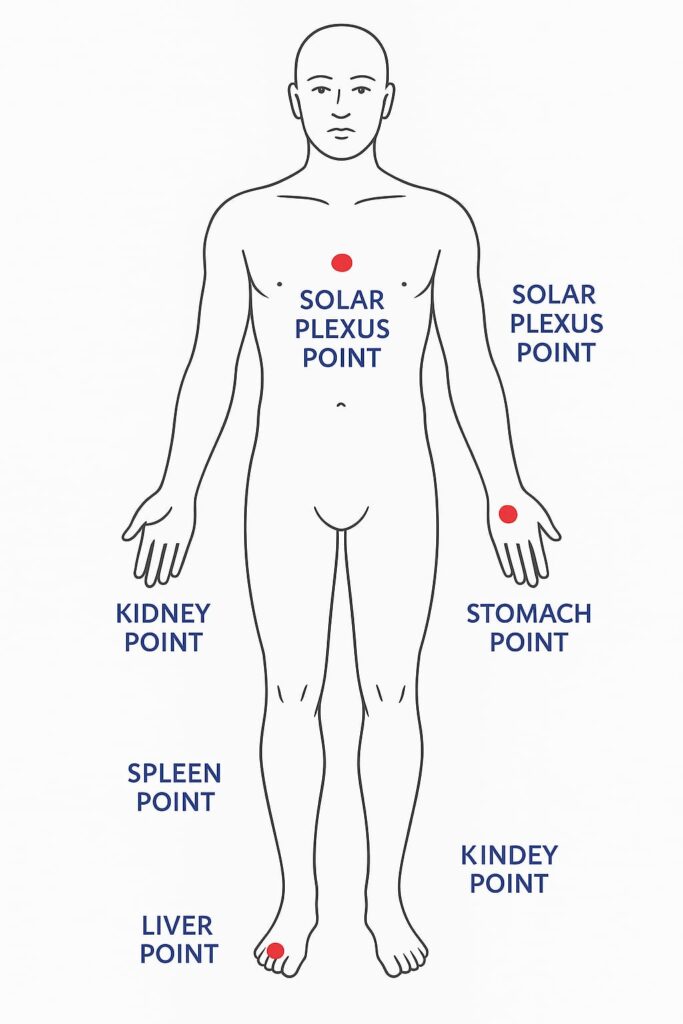
🌿 Acupressure Points for Diabetes Management
👉 Acupressure is an old healing method from Chinese medicine.
It uses gentle finger pressure on special points of the body to improve energy, blood flow, and organ health.
For diabetes, some points may help support the pancreas, liver, kidney, and digestion.
⚠️ Note: Acupressure does not replace doctor treatment or insulin. It is only supportive.
1. Liver Point (LV-3) – “Great Rushing Point”
- Where: On top of the foot, between the big toe and the second toe.
- How: Press with thumb for 2–3 minutes.
- Benefit: Helps liver function and improves sugar balance.
2. Kidney Point (KI-3) – “Supreme Stream Point”
- Where: Inside of the ankle, in the soft dip between ankle bone and Achilles tendon.
- How: Gently massage for 2–3 minutes.
- Benefit: Supports kidney function, helps body process sugar better.
3. Spleen Point (SP-6) – “Three Yin Crossing”
- Where: Inside of the leg, about four fingers above the ankle bone.
- How: Press gently for 2–3 minutes.
- Benefit: Supports digestion, pancreas, and hormone balance.
4. Stomach Point (ST-36) – “Leg Three Mile Point”
- Where: About four fingers below the knee, one finger width outside of the shin bone.
- How: Press firmly with thumb for 2–3 minutes.
- Benefit: Boosts digestion, energy, and immunity. Very famous point for health.
5. Pancreas Point (Hand Point)
- Where: Palm side of the hand, below the thumb, in the fleshy area.
- How: Press in small circles for 1–2 minutes.
- Benefit: Stimulates pancreas and helps regulate insulin.
6. Solar Plexus Point
- Where: Center of the palm (middle point).
- How: Press and hold for 1 minute while breathing slowly.
- Benefit: Reduces stress, helps sugar control (since stress raises blood sugar).
🌸 How to Practice Acupressure for Diabetes
- Sit in a comfortable chair.
- Take a few deep breaths.
- Press each point gently but firmly.
- Do 2–3 minutes per point.
- Practice daily (morning or evening).
🌟 Extra Tips
- Drink warm water after acupressure.
- Combine with walking, yoga, meditation, and healthy diet.
- Do not press too hard – it should be comfortable, not painful.
- Pregnant women should avoid SP-6 without expert advice.
✅ Final Words
Acupressure is like giving your body a gentle reminder to heal itself.
For diabetes, the main focus is on pancreas, liver, kidney, digestion, and stress relief.
If you combine acupressure with faith, prayer, balanced diet, and medical care, it can become a powerful part of your healing journey.
🌿 7-Day Acupressure Routine for Diabetes
👉 Each day focus on 2–3 points.
👉 Time: 10–15 minutes per day.
👉 Best done in morning or evening, on an empty stomach.
🌞 Day 1 – Kickstart with Liver & Stress Relief
- Points:
- Liver Point (LV-3) – top of foot, between big toe & second toe.
- Solar Plexus Point – middle of palm.
- How: Press each for 2–3 minutes.
- Benefit: Balances liver, reduces stress (stress raises sugar).
🌞 Day 2 – Pancreas Boost
- Points:
- Pancreas Point – fleshy area below thumb (palm side).
- Stomach Point (ST-36) – below knee, outside shin bone.
- How: Press gently in circles, 2–3 minutes.
- Benefit: Supports pancreas function & digestion.
🌞 Day 3 – Kidney Support
- Points:
- Kidney Point (KI-3) – inside ankle, between bone & tendon.
- Solar Plexus Point – center of palm.
- Benefit: Helps kidney filter waste & balance fluids.
🌞 Day 4 – Spleen & Digestion
- Points:
- Spleen Point (SP-6) – inside leg, 4 fingers above ankle.
- Stomach Point (ST-36).
- Benefit: Strengthens digestion & hormone balance.
🌞 Day 5 – Stress & Energy Balance
- Points:
- Solar Plexus Point – middle of palm.
- Liver Point (LV-3).
- Benefit: Relaxes mind & body, improves blood circulation.
🌞 Day 6 – Pancreas & Stomach Power
- Points:
- Pancreas Point – palm below thumb.
- Stomach Point (ST-36).
- Benefit: Improves insulin balance, supports metabolism.
🌞 Day 7 – Full Body Healing Flow
- Points:
- LV-3 (Liver Point).
- KI-3 (Kidney Point).
- SP-6 (Spleen Point).
- Benefit: Weekly reset for liver, kidney, spleen = total balance.
🌟 Extra Practice
- Drink warm water after each session.
- Sit quietly for 2 minutes, breathe deeply, feel relaxed.
- Combine with walking, yoga, Quran recitation, meditation, or prayer for stronger healing.
✅ This 7-day plan is like a healing cycle. You can repeat every week.
It is safe, natural, and works slowly but surely when done regularly.
👉 Reminder: This is a support plan for health, not a replacement for doctor treatment.
🌿 7-Day Yoga + Meditation + Mantra Plan for Diabetes
🌞 Day 1 – Breathing & Calmness
- Yoga: Anulom Vilom (Alternate Nostril Breathing) – sit straight, close one nostril, breathe slowly through the other, then switch.
- Meditation: 5 minutes of quiet sitting, focus on breath.
- Mantra: Chant softly – “Om Shanti Shanti Shanti” (peace, peace, peace).
- Benefit: Calms stress hormones, helps sugar balance.
🌞 Day 2 – Gentle Stretches
- Yoga: Tadasana (Mountain Pose) + Trikonasana (Triangle Pose).
- Meditation: Focus on gratitude – think of 3 blessings in your life.
- Mantra: “Om Namah Shivaya” (I bow to divine energy inside me).
- Benefit: Improves blood flow, stretches muscles, lowers anxiety.
🌞 Day 3 – Digestive Support
- Yoga: Pawanmuktasana (Wind-Relieving Pose) + Setu Bandhasana (Bridge Pose).
- Meditation: Sit and visualize a healing light around your stomach.
- Mantra: “Om Dhanvantre Namah” (salutation to the divine healer).
- Benefit: Supports digestion and metabolism, which helps sugar control.
🌞 Day 4 – Energy Balance
- Yoga: Bhujangasana (Cobra Pose) + Dhanurasana (Bow Pose).
- Meditation: 5–10 minutes body-scan meditation (notice head, arms, belly, legs, relax each).
- Mantra: “Om” (the universal vibration).
- Benefit: Strengthens pancreas, reduces tiredness, boosts mood.
🌞 Day 5 – Mindful Eating Practice
- Yoga: Vajrasana (Diamond Sitting Pose) – sit after meals for 5–10 minutes.
- Meditation: Eat slowly, chew well, focus only on food (no TV/phone).
- Mantra: “Om Bhojanaya Namah” (gratitude for food).
- Benefit: Helps digestion, prevents sugar spikes.
🌞 Day 6 – Stress Release
- Yoga: Shavasana (Corpse Pose) – lie flat, relax body completely.
- Meditation: Deep breathing + imagine stress melting away.
- Mantra: “Om Mani Padme Hum” (Buddhist mantra of compassion).
- Benefit: Deep relaxation lowers cortisol, balances sugar.
🌞 Day 7 – Full Healing Flow
- Yoga Sequence:
- Surya Namaskar (Sun Salutation – slow, 4–6 rounds)
- Supta Baddha Konasana (Reclined Butterfly)
- Shavasana (final relaxation)
- Meditation: Sit quietly, repeat affirmation: “I am calm, I am healthy, I am healing.”
- Mantra: “Om Dhanvantre Namah” (healing mantra).
- Benefit: Improves overall circulation, digestion, and mental peace.
🌟 Tips for Best Results
- Practice early morning or evening, on an empty stomach.
- Keep each session 20–30 minutes (can be shorter if busy).
- Drink warm water before starting.
- Do not force the body—move gently.
- Combine with doctor’s advice, healthy diet, and regular walking.
✅ Final Words
- Yoga helps the body (digestion, circulation, pancreas).
- Meditation helps the mind (stress reduction).
- Mantras help the spirit (positive energy).
Together, they make diabetes management more natural and peaceful.
💊 Advanced Medicine Salts for Diabetes
Diabetes medicines mostly come in the form of salts (the active chemical that works inside the body).
These medicines control blood sugar in different ways.
🌟 1. Metformin (Biguanide Salt)
- How it works:
- Reduces sugar made by the liver.
- Helps body cells use insulin better.
- Benefits: First choice medicine for Type 2 Diabetes.
- Common brand names: Glucophage, Metformin tablets.
🌟 2. Sulfonylureas (Glimepiride, Gliclazide, Glibenclamide)
- How it works: Makes pancreas release more insulin.
- Benefits: Lowers sugar quickly.
- Warning: Can sometimes cause low sugar (hypoglycemia).
🌟 3. DPP-4 Inhibitors (Sitagliptin, Vildagliptin, Saxagliptin)
- How it works: Keeps a hormone (GLP-1) active longer → helps pancreas release insulin after meals.
- Benefits: Gentle, safe, does not cause weight gain.
- Often used with: Metformin.
🌟 4. SGLT2 Inhibitors (Empagliflozin, Dapagliflozin, Canagliflozin)
- How it works: Removes extra sugar through urine.
- Benefits:
- Good for heart and kidney protection.
- Helps in weight loss.
- Side note: Must drink water to avoid dehydration.
🌟 5. GLP-1 Receptor Agonists (Liraglutide, Dulaglutide, Semaglutide)
- How it works:
- Slows stomach emptying.
- Helps pancreas release insulin only when needed.
- Reduces appetite.
- Benefits: Strong sugar control + weight loss.
- Form: Mostly injections.
🌟 6. Thiazolidinediones (Pioglitazone)
- How it works: Helps cells use insulin better.
- Benefit: Improves insulin resistance.
- Warning: Can cause weight gain and water retention.
🌟 7. Insulin (Different Types: Rapid, Short, Long Acting)
- How it works: Directly gives insulin that the body cannot make enough.
- Types:
- Rapid-acting (Lispro, Aspart) → works in minutes.
- Short-acting (Regular insulin).
- Long-acting (Glargine, Detemir, Degludec) → works all day.
- Benefit: Most powerful way to control sugar.
🧠 Easy Summary
- Metformin = first step.
- Sulfonylureas = push pancreas to work harder.
- DPP-4 inhibitors = gentle, protect insulin.
- SGLT2 inhibitors = throw sugar out in urine.
- GLP-1 agonists = weight loss + sugar control.
- Thiazolidinediones = improve insulin use.
- Insulin = when body cannot manage sugar alone.
⚠️ Important:
These salts are prescribed by doctors only. Diabetes treatment depends on age, sugar level, kidney, liver, and heart health. Never start without medical advice.
🌟 Strong Conclusion by Shoaib Nasir
“Diabetes is not just a disease of sugar; it is a message from life. It is a wake-up call that our body, our mind, and our soul are out of balance. For thousands of years, holy books, prophets, saints, doctors, and scientists have all told us one truth: health is a trust, and we are responsible for protecting it.”
“The Qur’an teaches us about healing foods and moderation. The Bible reminds us that our body is the temple of God. Hinduism, Buddhism, Taoism—all say the same: eat clean, live balanced, calm your mind. Modern science now confirms what faith already whispered: stress, greed, and excess harm us; balance, peace, and gratitude heal us.”
“So diabetes is not only about avoiding sugar. It is about avoiding the sugar of pride, the sugar of anger, the sugar of stress. It is about returning to natural food, to prayer, to meditation, to love, and to self-control. This is not only for Muslims, not only for Christians, Hindus, Buddhists, or Jews—this is for every human soul on this planet.”
“If one person changes his lifestyle, he saves his body. But if humanity changes together, we save our future. Diabetes is one of the biggest killers of today—but it can also become the biggest teacher of tomorrow. It can teach us how to return to simplicity, to nature, to God, and to each other.”
“I, Shoaib Nasir, believe that the day humanity learns to eat with moderation, live with compassion, and pray with devotion—that day, not only diabetes but many diseases will disappear. This is not just health advice. This is a revolution of the body, a revolution of the spirit, a revolution of humanity.”
“Let this be our new declaration: We will not be slaves of sugar; we will be servants of God. We will not live for food; we will eat for life. We will not just cure diabetes; we will cure our way of living. And when we do this, the world will change—not in hospitals, but in every heart, every home, and every soul.”
Leave a Reply